The tattoo healing process is an important part of getting a new tattoo. After the tattoo artist finishes the design, your skin needs time to recover from the tiny punctures created by the needles. During this period, you may notice redness, mild swelling, tenderness, peeling, itching, and scabbing.
Every tattoo heals differently. The size of the design, its location, your skin, and your aftercare routine can all affect healing. A small tattoo may feel better within a few days, while a large or heavily shaded design may need more time to recover.
Understanding the stages of tattoo healing helps you care for your skin, protect the tattoo’s appearance, and recognize signs of possible infection. This guide explains the healing timeline, daily aftercare, common mistakes, and what to expect as your tattoo recovers.
What Is the Tattoo Healing Process?
The tattoo healing process is the period during which your skin repairs itself after tattooing. The needles deposit ink into the skin while creating small wounds that need proper care.
During healing, the skin gradually closes, damaged surface cells shed, and the tattoo becomes more settled in appearance. You may notice changes in color and texture as the skin recovers.
Here are some important points about tattoo healing:
- Fresh tattoos may look brighter or darker than expected.
- Mild redness, tenderness, and swelling can occur initially.
- Peeling and itching are common during recovery.
- Scabs may form and should not be picked.
- The surface can look healed before deeper skin layers have fully recovered.
- Proper aftercare helps protect the skin and preserve the tattoo.
How Long Does a Tattoo Take to Heal?
The surface of a tattoo often heals over approximately two to four weeks, although some tattoos take longer. Deeper skin recovery can continue after the visible peeling and scabbing have stopped. Healing time varies with the tattoo’s size, placement, and individual skin response.
| Healing period | What you may notice |
| Days 1–3 | Tenderness, redness, mild swelling, and possible fluid |
| Days 4–7 | Itching, dryness, peeling, and early scabbing |
| Week 2 | Continued flaking and gradual improvement |
| Weeks 3–4 | Surface skin often looks more settled |
| Following weeks | Deeper recovery and changes in the tattoo’s appearance may continue |
These stages are approximate rather than strict deadlines. Follow your tattoo artist’s aftercare instructions and seek medical advice if symptoms worsen instead of improving.
The 5 Main Stages of Tattoo Healing
The tattoo healing process is not exactly the same for everyone. However, most fresh tattoos go through several recognizable stages as the skin recovers.
Stage 1: Fresh Tattoo and Initial Healing
The first stage begins immediately after your tattoo session. The tattooed skin may appear red, slightly swollen, shiny, or tender because the procedure has irritated the skin.
You may also notice a small amount of clear fluid mixed with ink or blood during the first part of recovery.
Common experiences include:
- Mild redness around the tattoo.
- Slight swelling and tenderness.
- A warm or sensitive feeling in the area.
- Small amounts of clear fluid.
- A tattoo that appears darker or brighter than expected.
What to do: Keep the tattoo covered for the period recommended by your artist. Wash your hands before touching it, and follow the instructions provided for removing the dressing.
Stage 2: Redness Begins to Settle
During the next several days, mild redness and tenderness should gradually improve. The skin may begin to feel dry or tight as the surface starts repairing itself.
The tattoo may still look shiny or slightly raised in places. Some people experience more discomfort than others, depending on the size and location of the tattoo.
Signs commonly seen during this stage include:
- Redness that gradually decreases.
- Less tenderness than during the first day.
- Dry or tight skin.
- Mild sensitivity when clothing touches the area.
- Gradual changes in the tattoo’s surface texture.
What to do: Clean the tattoo gently, avoid rubbing it, and apply a suitable fragrance-free moisturizer if recommended by your artist.
Stage 3: Peeling and Flaking
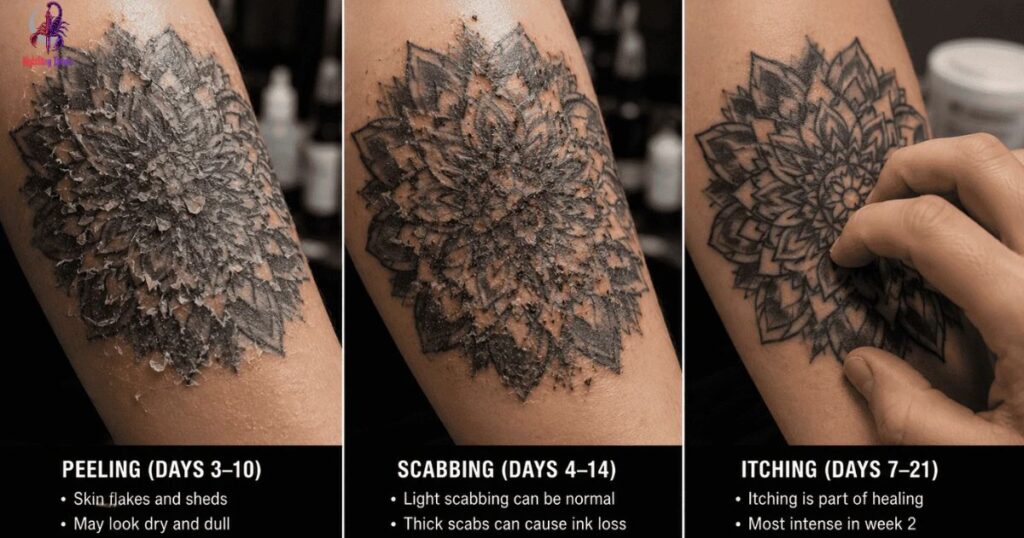
Peeling often begins during the first week. The tattooed skin may shed thin flakes that resemble the peeling skin after a mild sunburn.
This can make the tattoo look patchy or faded temporarily. The appearance during peeling does not necessarily show the final result.
You may notice:
- Small pieces of dry skin coming away.
- Mild itching.
- A dull or cloudy appearance.
- Fine flakes around darker ink.
- Small scabs forming over certain areas.
What to do: Let the skin shed naturally. Do not pull off flakes or scratch itchy areas because this can damage healing skin.
Stage 4: Scabbing and Continued Recovery
Some tattoos develop small scabs, especially in areas with heavier shading or more skin irritation. Scabbing can be part of normal healing, but thick, worsening, or unusual scabs deserve attention.
During this stage:
- The skin may feel dry and tight.
- Small scabs may gradually loosen.
- Itching may continue.
- The tattoo may appear uneven while the surface changes.
- Tenderness should generally continue to improve.
What to do: Do not pick, peel, or force scabs off. Keep the area clean and follow the aftercare routine recommended for your tattoo.
Stage 5: Surface Healing and Settling
After the peeling and scabbing have finished, the tattoo may look softer or less vibrant than it did immediately after the session. This is often part of the normal recovery process.
The skin’s surface may look normal even though deeper recovery is still continuing.
At this stage:
- Most visible peeling may have stopped.
- The skin should feel more comfortable.
- The tattoo’s appearance may become more consistent.
- Dryness may still occur.
- The design may need more time before its final appearance is clear.
What to do: Continue moisturizing if needed, protect the healed tattoo from excessive sunlight, and allow enough time for complete recovery before considering a touch-up.
Tattoo Healing Process Day by Day
The following timeline provides a general idea of what you might experience during the first two weeks.
Read More:Red Tattoo Ideas: Unique, Cute, Small, and Bold Red Ink Designs
Day 1: Fresh Ink
Your tattoo may be red, tender, and slightly swollen. A small amount of fluid may appear as the skin begins its recovery.
- Follow your artist’s dressing instructions.
- Wash your hands before touching the tattoo.
- Avoid unnecessary contact.
- Do not apply unapproved products.
Day 2: Early Recovery
The tattoo may remain sensitive, and some redness can still be present. The area may feel tight or warm.
- Clean it gently according to your aftercare instructions.
- Pat it dry with a clean, soft towel.
- Avoid tight clothing that rubs the area.
- Watch for worsening pain or spreading redness.
Day 3: Skin Begins to Settle
For many people, the tattoo starts feeling more comfortable around this time. However, redness, swelling, or tenderness may continue.
- Keep the tattoo clean.
- Avoid scratching.
- Use only suitable aftercare products.
- Follow your artist’s instructions about dressings.
Days 4–5: Dryness and Itching
The skin may become dry, and itching can begin. Some tattoos start peeling during this period.
- Avoid scratching the tattoo.
- Do not pull off loose skin.
- Apply a thin layer of suitable moisturizer if advised.
- Choose clean, loose clothing.
Days 6–7: Peeling Becomes Noticeable
The tattoo may look dull, flaky, or uneven. This is a common part of surface recovery.
- Let flakes come away naturally.
- Avoid harsh soaps and exfoliants.
- Do not shave over the healing area.
- Continue monitoring the skin.
Days 8–10: Continued Healing
Some people notice less peeling, while others still have dry patches or small scabs. Healing speed depends on the tattoo and the individual.
- Continue gentle cleaning.
- Do not pick remaining scabs.
- Avoid swimming and soaking the tattoo.
- Seek advice if symptoms are worsening.
Days 11–14: Gradual Improvement
The surface may look smoother, but some peeling or sensitivity can remain. Do not assume the tattoo is completely healed based only on its appearance.
- Keep the skin clean and moisturized as needed.
- Avoid unnecessary friction.
- Continue protecting the area.
- Allow additional healing time when required.
Tattoo Healing Process After 2 Weeks
After two weeks, many tattoos look much better. Most of the obvious peeling may have finished, but the skin can still be recovering.
You might notice a slightly cloudy appearance or differences in how the colors look under the new surface skin.
During this period:
- Avoid picking any remaining scabs.
- Continue following aftercare instructions.
- Avoid exposing an incompletely healed tattoo to swimming pools or hot tubs.
- Do not rush into exfoliating or applying irritating skincare products.
- Ask your artist or a healthcare professional about any unusual symptoms.
If the tattoo remains painful, increasingly red, hot, or swollen, seek medical advice rather than assuming the healing process is simply taking longer.
Tattoo Healing Process After 1 Month
By around one month, many tattoos have completed much of their visible surface healing. However, the exact timeline varies, and some areas may take longer to recover fully.
The tattoo’s appearance may continue to settle as the skin returns to its usual texture.
You may notice:
- Less sensitivity.
- A smoother surface.
- More consistent color.
- Little or no visible peeling.
- Continued improvement in skin texture.
If the skin has fully healed, you can generally return to your usual skincare routine gradually. Protect the tattoo from sunlight with broad-spectrum, water-resistant SPF 30 or higher sunscreen once it is healed, as recommended by dermatologists.
How to Take Care of a New Tattoo
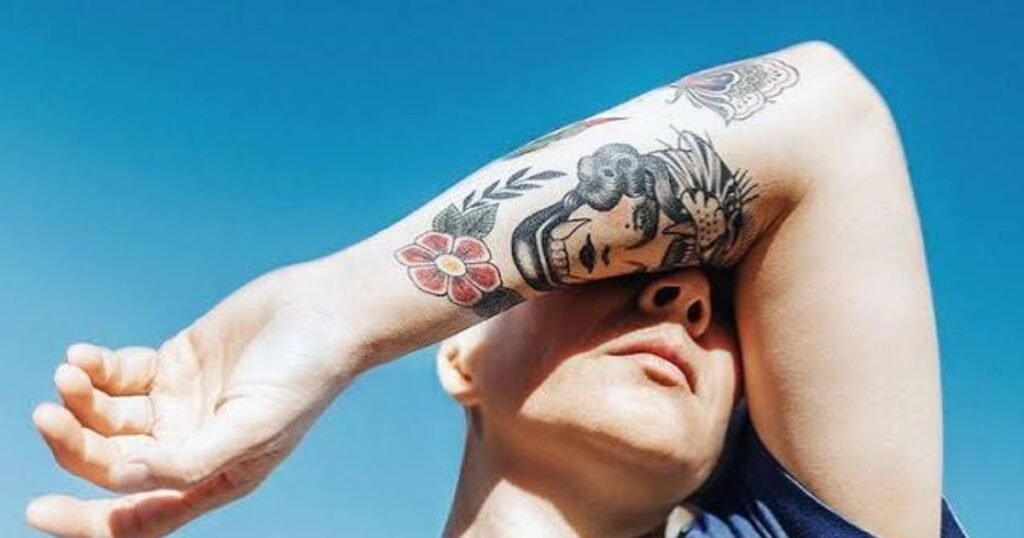
Proper aftercare helps keep the tattoo clean while your skin repairs itself. Always follow your tattoo artist’s specific instructions, especially when using a medical adhesive or specialized dressing.
1. Wash Your Hands Before Touching the Tattoo
Clean hands help reduce the risk of introducing germs to the healing area.
- Wash your hands with soap and water.
- Avoid touching the tattoo unnecessarily.
- Do not let other people handle the fresh tattoo.
- Use clean towels and clothing.
2. Clean the Tattoo Gently
Use the cleaning method recommended by your artist. Once the dressing can be removed, gentle washing with clean water and a mild, fragrance-free cleanser is often appropriate.
- Avoid scrubbing the tattoo.
- Rinse away soap carefully.
- Pat the skin dry rather than rubbing it.
- Do not use harsh cleaning chemicals.
- Avoid repeatedly washing the area more than recommended.
3. Apply Suitable Moisturizer
A suitable moisturizer can help reduce dryness during recovery. Use a thin layer rather than covering the tattoo with a thick, greasy coating.
- Choose a fragrance-free product.
- Follow your artist’s aftercare advice.
- Stop using a product if it causes irritation.
- Avoid applying unnecessary products to the healing skin.
The American Academy of Dermatology recommends a water-based lotion or cream for dry tattooed skin and notes that petroleum-based products can contribute to ink fading.
4. Protect the Tattoo From Friction
Friction can irritate a fresh tattoo and interfere with comfortable healing.
- Wear clean, loose clothing.
- Avoid tight straps over the tattoo.
- Do not rub the area with towels.
- Avoid activities that repeatedly scrape the skin.
- Follow your artist’s advice about sports and exercise.
5. Follow Dressing Instructions
Different dressings require different care. Some are removed after a short period, while certain medical adhesive films can remain in place longer.
- Follow the manufacturer’s and artist’s instructions.
- Do not remove an adhesive dressing earlier than instructed unless you have a concerning reaction or have been advised to do so.
- If the dressing leaks, becomes contaminated, or causes a significant reaction, contact your artist or a healthcare professional for guidance.
What Should You Avoid During the Tattoo Healing Process?
Certain activities can irritate the skin or expose a fresh tattoo to contamination.
- Do not scratch: Scratching can damage the healing surface.
- Do not pick scabs: Removing scabs prematurely can cause skin damage and affect the tattoo’s appearance.
- Avoid swimming: Stay out of pools, hot tubs, lakes, and other soaking environments until the tattoo has healed.
- Avoid direct sun exposure: Keep the fresh tattoo covered with suitable clothing rather than applying sunscreen to open or healing skin.
- Avoid harsh skincare products: Exfoliants, fragrances, and strong active ingredients can irritate the area.
- Avoid unapproved ointments: Some products can irritate the skin or interfere with your aftercare routine.
- Avoid unnecessary friction: Tight clothes and repeated rubbing can make the area uncomfortable.
- Do not ignore worsening symptoms: Increasing redness, pain, or swelling may indicate a complication.
Is Peeling Normal During Tattoo Healing?
Yes, peeling is commonly part of the tattoo healing process. As the surface skin repairs itself, dead skin cells may come away in small flakes.
The amount of peeling depends on the tattoo’s size, location, technique, and individual skin response.
Normal peeling may include:
- Fine flakes of dry skin.
- Mild itching.
- A temporarily dull appearance.
- Small areas of surface shedding.
- Gradual improvement over several days.
Avoid pulling off peeling skin. If the area develops worsening redness, pus, increasing pain, or spreading warmth, seek medical advice.
Is It Normal for a Tattoo to Itch?
Mild itching is common as the skin becomes dry and begins peeling. It does not automatically mean that something is wrong.
To manage ordinary itching:
- Avoid scratching.
- Keep the skin clean.
- Use a suitable fragrance-free moisturizer if recommended.
- Wear loose clothing.
- Avoid products that cause stinging or irritation.
Severe itching, a spreading rash, blisters, or raised bumps may indicate an allergic reaction or another skin problem. Ask a healthcare professional for advice if these symptoms occur.
Is It Normal for a Tattoo to Look Cloudy or Faded?
A healing tattoo can temporarily look cloudy, dull, or less vibrant while the surface skin sheds and renews itself.
The color seen immediately after tattooing is not always the final healed appearance.
Common reasons for temporary changes include:
- Dry or peeling skin.
- A thin layer of healing surface skin.
- Small scabs that are still present.
- Natural differences in how colors appear on the skin.
- The tattoo settling as healing progresses.
Do not judge the final result too early. If you notice unusual pigment changes alongside a rash, swelling, pain, or other concerning symptoms, consult a healthcare professional.
Signs That Your Tattoo Is Healing Normally
Although each tattoo heals differently, certain changes are generally consistent with normal recovery.
- Mild redness that gradually decreases.
- Slight swelling that improves.
- Tenderness that becomes less noticeable.
- Dryness and light peeling.
- Mild itching without a worsening rash.
- Small scabs that come away naturally.
- Gradual improvement in the skin’s appearance.
The overall trend matters. Symptoms should generally become less intense rather than progressively worse.
Signs of Tattoo Infection
A tattoo can become infected even when aftercare instructions are followed. Recognizing warning signs early is important.
Contact a healthcare professional promptly if you notice:
- Redness that spreads or becomes more intense.
- Pain that worsens rather than improves.
- Increasing swelling or warmth.
- Pus or unusual discharge.
- Open sores or worsening skin damage.
- Fever or chills.
- Red streaks extending away from the tattoo.
These signs can indicate an infection and should not be treated as ordinary peeling or itching. The American Academy of Dermatology recommends seeking medical care promptly when infection symptoms appear.
If you develop severe symptoms, feel very unwell, or have rapidly spreading redness, seek urgent medical care.
Tattoo Healing Problems: What Can Cause Them?
Healing difficulties can have several causes. Not every skin reaction is an infection, so a professional assessment may be needed.
Possible causes include:
- Poor hygiene: Contamination can increase the risk of infection.
- Excessive friction: Repeated rubbing can irritate healing skin.
- Picking or scratching: This can damage the surface.
- Product irritation: Fragrances or unsuitable products may trigger reactions.
- Ink allergy: Some people develop reactions to particular tattoo pigments.
- Sun exposure: UV light can affect tattooed skin and fade ink.
- Individual skin conditions: Some skin conditions can appear or worsen in tattooed areas.
Avoid trying to diagnose a significant reaction yourself. A dermatologist or other qualified healthcare professional can assess the symptoms and recommend appropriate treatment.
Does Tattoo Size Affect Healing Time?
Yes, tattoo size and complexity can influence recovery. A small, simple design may be easier to care for than a large tattoo with extensive shading, although individual healing varies.
| Tattoo type | Possible healing considerations |
| Small tattoo | Usually a smaller area of healing skin |
| Fine-line tattoo | Requires protection from rubbing and picking |
| Large tattoo | Covers a wider area and may need more careful aftercare |
| Color tattoo | May involve extensive work and different levels of skin irritation |
| Sleeve tattoo | Often completed over multiple sessions |
| Heavily shaded tattoo | May have more tenderness or scabbing in some areas |
Do not assume a small tattoo is fully healed sooner than every large tattoo. Monitor your own skin and follow professional instructions.
Does Tattoo Placement Affect Healing?
The location of your tattoo can affect comfort and aftercare. Areas exposed to frequent movement, sweat, clothing friction, or pressure may require extra attention.
- Hands and fingers: Frequent washing and daily use can make aftercare challenging.
- Feet and ankles: Shoes and socks may rub the area.
- Elbows and knees: Bending and movement can create friction.
- Ribs and torso: Clothing may irritate the tattoo.
- Back and shoulders: Sleeping positions or straps may create pressure.
- Forearms: Everyday activities and sun exposure may affect aftercare.
Ask your tattoo artist how to protect your particular placement during work, exercise, and sleep.
When Can You Exercise After Getting a Tattoo?
The timing depends on the tattoo’s size, placement, and your activity. Light activity may be comfortable for some people, but intense workouts can increase sweating, friction, and irritation.
Consider these precautions:
- Avoid activities that rub or stretch the tattoo repeatedly.
- Keep gym equipment from touching the healing area.
- Wear clean clothing.
- Clean the tattoo according to your aftercare instructions after sweating.
- Avoid swimming until the tattoo has healed.
- Ask your artist for advice if you have a large or heavily shaded tattoo.
There is no single exercise schedule that suits every tattoo. Let the skin’s condition and your artist’s guidance determine when you resume your usual routine.
When Can You Shower After Getting a Tattoo?
Many people can shower with a new tattoo when they follow their artist’s dressing instructions. However, showering is different from soaking the tattoo for an extended period.
- Follow the instructions for your dressing.
- Use lukewarm water rather than very hot water.
- Avoid scrubbing the tattoo.
- Do not let strong water pressure irritate the area.
- Pat the tattoo dry with a clean towel.
- Avoid baths, swimming pools, and hot tubs until the tattoo has healed.
If you have a specialized adhesive dressing, follow the instructions specific to that product.
How Can You Help Your Tattoo Heal Properly?
You cannot force the skin to heal instantly, but you can support the process by following a consistent routine.
- Choose a reputable tattoo studio with good hygiene practices.
- Follow the aftercare instructions provided.
- Keep the tattoo clean.
- Avoid picking, scratching, and unnecessary rubbing.
- Use suitable, fragrance-free products.
- Avoid soaking the tattoo while it heals.
- Protect the area from excessive sunlight.
- Seek medical advice if symptoms worsen.
Patience is important. Giving your skin enough time to recover can help reduce unnecessary irritation and protect the finished design.
Tattoo Healing Process: Common Mistakes to Avoid
Some common mistakes can interfere with comfortable healing.
- Removing a dressing too early or leaving it on contrary to instructions.
- Touching the tattoo with unwashed hands.
- Scrubbing the skin while cleaning.
- Applying too much moisturizer.
- Using alcohol, hydrogen peroxide, or harsh chemicals without medical guidance.
- Picking scabs or pulling off flakes.
- Swimming before the tattoo has healed.
- Applying sunscreen directly to an open, healing tattoo.
- Ignoring worsening redness, swelling, or pain.
A simple, consistent aftercare routine is generally preferable to using many products or trying several home remedies.
Frequently Asked Questions About the Tattoo Healing Process
1. How long does the tattoo healing process take?
The visible surface often heals in about two to four weeks, but the exact time varies. Deeper skin recovery may continue beyond the point when peeling stops.
2. What are the stages of tattoo healing?
The main stages include initial tenderness and redness, gradual settling, peeling, scabbing where it occurs, and surface recovery. These stages can overlap and vary between people.
3. Is peeling normal after getting a tattoo?
Yes. Light peeling is a common part of healing. Let the skin shed naturally instead of scratching or pulling off flakes.
4. Why is my tattoo itchy while healing?
Itching can occur as the skin becomes dry and begins peeling. Severe itching, a rash, or blisters may indicate a reaction that needs medical assessment.
5. Can I shower with a fresh tattoo?
Usually, yes, when your dressing instructions allow it. Use gentle water and avoid scrubbing or soaking the tattoo.
Conclusion
The tattoo healing process takes patience, gentle care, and attention to changes in your skin. Redness, mild tenderness, peeling, and itching can be normal parts of recovery, but symptoms that worsen or suggest infection should never be ignored.
Clean your tattoo as instructed, avoid scratching and soaking it, use suitable aftercare products, and give your skin enough time to recover. With consistent care and guidance from a reputable tattoo artist, you can support healing and help preserve the appearance of your new tattoo.