A smile now cry later tattoo is a meaningful tattoo design that features two contrasting expressions: one smiling and one crying. These faces represent the different emotions people experience throughout life. The design often reminds people that happiness and sadness can exist together, even when others only see one side of their personality.
This tattoo is commonly associated with emotional strength, hidden pain, life’s ups and downs, and the difference between how people appear on the outside and how they feel inside. Some people choose it because it reflects their personal experiences, while others appreciate its dramatic appearance and symbolic meaning.
If you are thinking about getting a smile now cry later tattoo, there are many styles to explore. From traditional comedy and tragedy masks to small minimalist designs, realistic faces, and bold black-and-gray artwork, this tattoo can be personalized in several ways.
What Is a Smile Now Cry Later Tattoo?
A smile now cry later tattoo usually features two faces or masks. One face is smiling, while the other is crying or showing sadness. The contrast creates a visual representation of two different emotional experiences.
The design is sometimes called a comedy and tragedy tattoo because it resembles the theatrical masks associated with comedy and tragedy. It can be simple or highly detailed, depending on the artist’s style.
Some designs include only the two faces, while others add roses, clocks, lettering, skulls, or other symbols. The final meaning often depends on the details and the personal story behind the tattoo.
Smile Now Cry Later Tattoo Meaning
The smile now cry later tattoo can represent several ideas, but its most common meaning is the contrast between happiness and sadness.
For some people, the smiling face represents joy, confidence, and the ability to keep going. The crying face represents grief, disappointment, emotional struggles, or difficult memories.
Together, the faces can symbolize the understanding that life contains both good and bad moments. The tattoo may also remind its wearer that people do not always reveal what they are experiencing internally.
Common Symbolic Meanings
- Happiness and sadness: Life includes both positive and difficult experiences.
- Hidden emotions: People may smile even when they are struggling.
- Emotional strength: Difficult experiences can become part of personal growth.
- Life’s ups and downs: Feelings and circumstances can change over time.
- Resilience: A person can continue moving forward through hardship.
- Balance: Joy and sadness are both natural parts of being human.
- Personal memories: The faces may represent important moments or relationships.
The meaning is personal. Not everyone with this tattoo has experienced the same struggles, and the design should not be assumed to tell someone’s complete story.
Why Do People Get Smile Now Cry Later Tattoos?
People choose this tattoo for different reasons. Some connect with its emotional message, while others like its recognizable design and dramatic appearance.
It may represent a personal experience, a reminder to appreciate happy moments, or an acknowledgment that life can be unpredictable. Some people also choose it as a tribute to an important period in their lives.
Before getting the tattoo, think about what the two faces mean to you. A personal reason can help you choose details that make the design more meaningful.
History of the Smile Now Cry Later Tattoo
The smile and cry imagery is closely associated with the comedy and tragedy masks used in theater. These masks represent different emotional tones in dramatic performances and have become widely recognized symbols of contrasting experiences.
The imagery later appeared in various forms of art, entertainment, and tattoo culture. In tattoo designs, the two faces can communicate emotion without needing a long written message.
The phrase “smile now, cry later” can also be interpreted in different ways. Some people view it as a reminder to enjoy the present, while others associate it with hidden struggles or the consequences of present choices.
There is no single historical meaning shared by everyone who chooses this tattoo.
Smile Now Cry Later Tattoo Designs
The design can be adapted to different artistic styles, sizes, and placements. Here are some popular ideas to consider.
1. Classic Smile Now Cry Later Tattoo
The classic design features one smiling face beside one crying face. It is often drawn with strong outlines and clear expressions.
This style is a good choice if you want the symbolism to be immediately recognizable. It can be placed on the forearm, upper arm, shoulder, or calf.
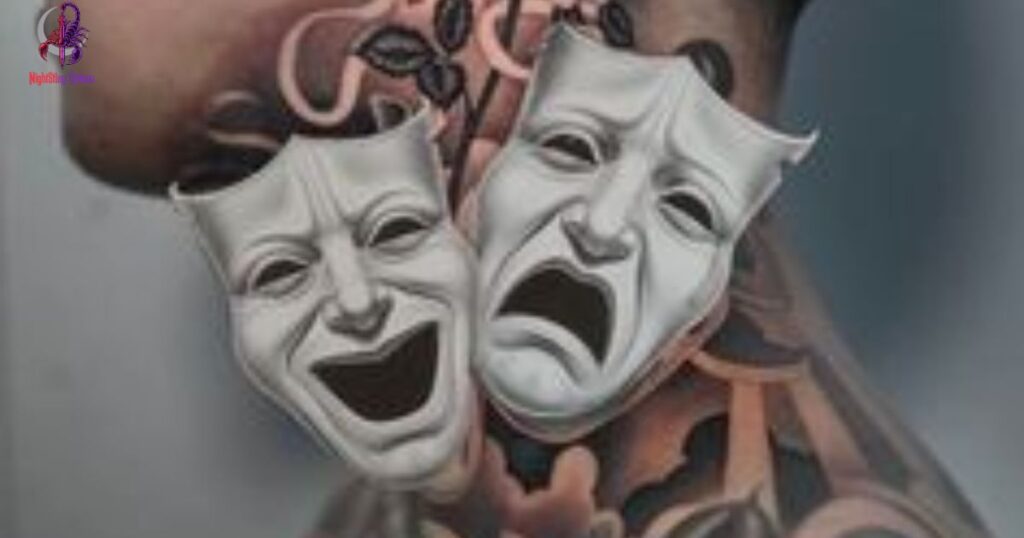
2. Comedy and Tragedy Mask Tattoo
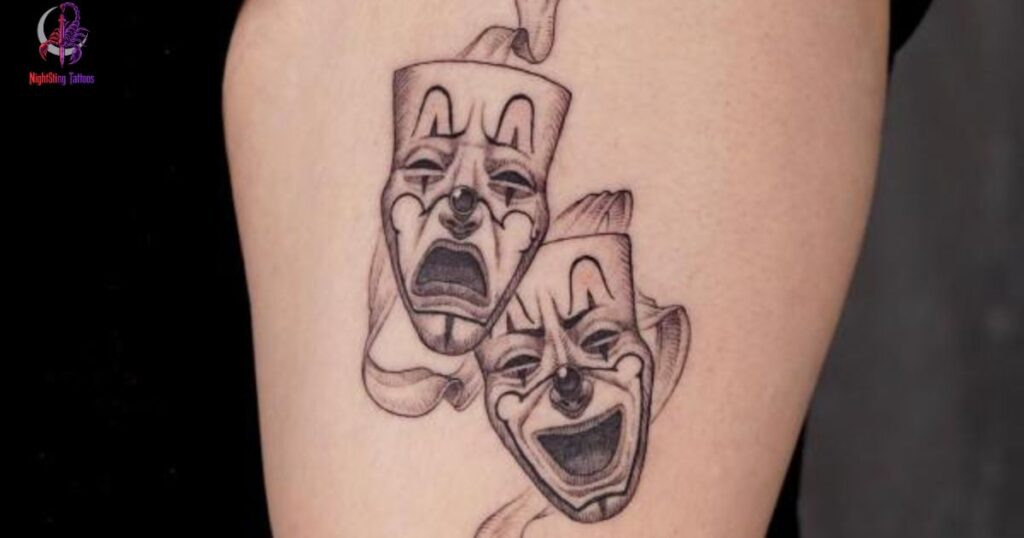
This design uses theatrical masks to represent happiness and sadness. One mask has a cheerful expression, while the other looks sorrowful.
The masks can be simple, realistic, or decorated with traditional artistic details. This version is suitable for people who appreciate theater, drama, or classic tattoo imagery.
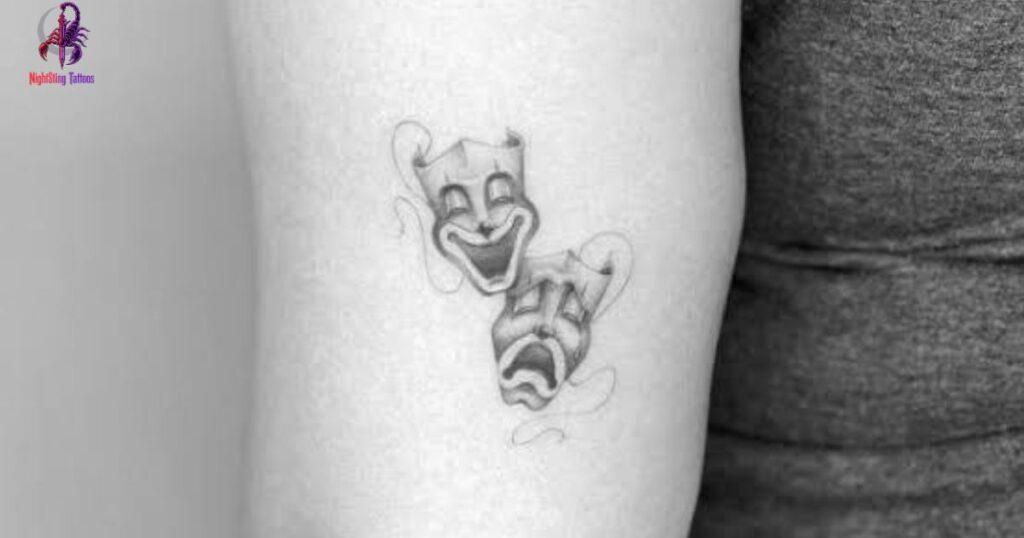
3. Small Smile Now Cry Later Tattoo
A small smile now cry later tattoo keeps the two faces compact and simple. It may use minimal lines, small expressions, or tiny mask outlines.
Popular placements include the wrist, ankle, upper arm, and lower leg. Avoid adding too many fine details because small tattoos can become harder to read as they age.
4. Smile Now Cry Later Forearm Tattoo
The forearm offers space for two clearly defined faces, lettering, and additional shading. The design can run vertically along the arm or sit horizontally across the forearm.
This placement is noticeable and works well if you want to see the tattoo regularly. Consider how it may appear with short sleeves and at work.
5. Smile Now Cry Later Sleeve Tattoo
A sleeve can combine the two faces with other symbols, such as roses, clocks, smoke, or abstract backgrounds. The larger space allows the artist to build a complete composition.
You can choose a half sleeve or a full sleeve depending on your budget and preferences. Plan the whole design with your artist so the additional details complement the main faces.
6. Smile Now Cry Later Chest Tattoo
A chest tattoo can feature two large faces side by side or place one face on each side of the chest. The design may be symmetrical or adapted to the body’s natural shape.
This placement can support detailed shading and larger artwork. However, chest tattoos may be uncomfortable for some people, so discuss the expected session length and pain level with your artist.
7. Smile Now Cry Later Neck Tattoo
A neck tattoo makes the design highly visible. Some people choose small masks, while others use a more detailed composition along the side or back of the neck.
Consider visibility, workplace expectations, and long-term preferences before choosing this location. Neck tattoos can also be challenging to conceal.
8. Smile Now Cry Later Hand Tattoo
A hand tattoo can feature compact masks or simplified facial expressions. The placement makes the design easy to see, but hand tattoos may fade unevenly because the skin is frequently exposed and used.
Talk with your artist about the limitations of hand placement, the expected healing process, and whether touch-ups may be needed.
9. Smile Now Cry Later Leg Tattoo
The calf and thigh provide enough room for larger faces and additional elements. A calf design can be vertical, while a thigh tattoo may accommodate a wider composition.
This option may suit people who prefer a tattoo that is easier to cover with clothing. Larger designs can also include lettering or a background without overcrowding the faces.
10. Smile Now Cry Later Shoulder Tattoo
The shoulder’s curved shape can work well for two masks arranged side by side or slightly overlapping. Shading can help the faces look more dimensional.
A shoulder tattoo can be expanded into an upper-arm piece later if you decide to add more artwork.
Smile Now Cry Later Tattoo for Men
The design is popular among people who prefer bold, expressive tattoos. Some choose black-and-gray faces, traditional outlines, or larger pieces that incorporate lettering and symbolic details.
Ideas include:
- Bold comedy and tragedy masks on the forearm
- Black-and-gray faces on the upper arm
- Two masks surrounded by smoke
- A large chest tattoo with detailed shading
- A sleeve with clocks and roses
- A traditional design with strong outlines
- Minimalist masks near the wrist
- A dramatic neck or calf design
These are style ideas, not rules. Anyone can choose any version of the tattoo based on personal preference.
Smile Now Cry Later Tattoo for Women
Women may prefer minimalist faces, delicate linework, floral details, or larger designs with expressive shading. The symbolism can remain the same regardless of the artistic style.
Ideas include:
- Small fine-line comedy and tragedy masks
- Two faces with roses
- Minimalist smiling and crying expressions
- A delicate forearm design
- Masks with moon and star details
- A black-and-gray shoulder tattoo
- A floral design surrounding the faces
- A small ankle tattoo
The right design depends on the size, placement, and appearance you prefer.
Smile Now Cry Later Tattoo With Words
Some people add a phrase to explain the message behind the faces. Lettering can make the design more personal, but it should not overwhelm the main artwork.
Possible text ideas include:
- Smile Now, Cry Later
- Behind Every Smile
- Life Goes On
- Strength Through Struggles
- Joy and Pain
- Stay Strong
- One Day at a Time
- Through It All
Choose words that genuinely matter to you. Ask your artist to show how the lettering will fit with the faces and remain readable at the chosen size.
Smile Now Cry Later Tattoo With Roses
Roses can add beauty and another layer of symbolism to the design. A rose may represent love, remembrance, passion, or personal growth.
You could place one rose between the faces, surround both masks with flowers, or use a rose beside the crying face to emphasize remembrance. Black-and-gray roses create a classic appearance, while colored flowers can make the tattoo more vivid.
Smile Now Cry Later Tattoo With a Clock
A clock can represent time, change, memories, or the way emotions shift throughout life. Adding one to the two faces can make the overall design more detailed.
Some people choose a clock with a meaningful time, while others use a broken clock to suggest a difficult period or an important turning point. The meaning depends on the personal story behind the artwork.
Smile Now Cry Later Tattoo With a Skull
A skull adds a darker tone to the design. It may symbolize mortality, change, resilience, or an awareness that life is temporary.
The skull can appear behind the masks, between the two faces, or as part of a larger sleeve. This option works well for people who prefer dramatic or gothic artwork.
Smile Now Cry Later Tattoo With a Crown
A crown may symbolize confidence, authority, achievement, or self-respect. Adding one to a smiling or crying face can personalize the meaning.
For example, a crown above the smiling face may emphasize confidence, while a crown between the two masks may represent maintaining dignity through both good and bad experiences.
Smile Now Cry Later Tattoo With Smoke
Smoke can create movement and a dramatic background around the two faces. It can be drawn in black and gray or used to connect the tattoo to other pieces on the arm or chest.
This style may suit larger tattoos because the shading requires enough space to remain clear. Ask your artist to keep the faces prominent so the main symbolism does not disappear into the background.
Realistic Smile Now Cry Later Tattoo
A realistic version uses detailed shading, facial texture, highlights, and shadows to make the faces look more lifelike. Some designs resemble theatrical masks, while others feature realistic human expressions.
Realistic tattoos depend heavily on the artist’s technical skill. Review healed examples of their portrait or mask work before booking.
Traditional Smile Now Cry Later Tattoo
A traditional version uses bold outlines, clear shapes, and a relatively simple color palette. It may include red, yellow, green, or black, depending on the artist’s approach.
This style creates a recognizable design that can stand out without relying on highly detailed shading. It may also work well with other traditional tattoo elements.
Black and Gray Smile Now Cry Later Tattoo
Black-and-gray tattoos use dark outlines, gradients, and shadows to create depth. They can look subtle or dramatic depending on the amount of contrast.
This option works well for theatrical masks, realistic faces, and designs that include clocks, smoke, or skulls. It can also make a smaller tattoo look visually clear without using multiple colors.
Colorful Smile Now Cry Later Tattoo
A colorful design can give each face its own mood. The smiling face might use warm colors, while the crying face uses cooler shades, although there is no fixed rule.
Bright colors can make a tattoo feel expressive and energetic. Ask your artist to choose a palette that works with your skin and the design’s size.
Minimalist Smile Now Cry Later Tattoo
A minimalist tattoo uses a few clean lines to represent the two expressions. The faces may be simple outlines without heavy shading or backgrounds.
This approach can be suitable for someone who wants a subtle tattoo. A small design should avoid overly fine details that may become difficult to distinguish over time.
Matching Smile Now Cry Later Tattoos
Matching tattoos can represent a shared experience, friendship, or a close relationship. One person might choose the smiling face while the other chooses the crying face.
Another option is for both people to get the complete pair of masks. Before choosing a matching tattoo, make sure both people are comfortable with the design and its long-term meaning.
Smile Now Cry Later Tattoo Pain Level
The pain level depends on the tattoo’s location, size, detail, and your individual pain tolerance. Areas with thin skin or close to bone, such as the ribs, ankles, hands, and elbows, may feel more uncomfortable for some people.
A small tattoo may take less time than a detailed sleeve, but even short sessions can cause discomfort. Discuss breaks and session planning with your artist.
Eat beforehand, stay hydrated, and follow the studio’s instructions. Do not use numbing products unless your tattoo professional confirms that a specific product is appropriate.
Smile Now Cry Later Tattoo Cost in the USA
The cost depends on the size, detail, color, placement, and artist’s experience. A simple outline usually requires less time than a realistic design with complex shading.
| Tattoo size | General estimated cost |
| Small, simple design | 100–250 |
| Medium tattoo | 200–500 |
| Large detailed design | 500–1,200+ |
| Half sleeve | 700–2,000+ |
| Full sleeve | 1,500–4,000+ |
These are broad estimates for planning, not guaranteed prices. Actual costs vary by studio and location, and some artists charge by the hour.
Ask for a quote before booking and check whether the price includes any expected touch-up work.
How Long Does a Smile Now Cry Later Tattoo Take?
A small design may take less than an hour or a few hours, depending on the detail. A large tattoo with realistic faces, lettering, and a background may take several hours or multiple sessions.
Your artist can provide a better estimate after reviewing your reference images and preferred placement. Do not rush the appointment just to finish a complex design in one sitting.
Smile Now Cry Later Tattoo Aftercare
Proper aftercare helps the tattoo heal and protects the skin from unnecessary irritation.
- Follow your artist’s cleaning and dressing instructions.
- Wash your hands before touching the tattoo.
- Clean the area gently as directed.
- Use only recommended aftercare products.
- Do not scratch, pick, or peel the healing skin.
- Avoid swimming and soaking the tattoo until it has healed.
- Keep the tattoo away from direct sunlight during healing.
- Wear clean clothing that does not rub against the area.
- Avoid harsh chemicals and unapproved creams.
- Seek medical advice if you develop worsening pain, spreading redness, pus, or fever.
After healing, protect the tattoo from excessive sun exposure to help preserve its appearance.
Relevant Post……..Leg Tattoo Ideas: Best Designs, Styles, and Placement Inspiration
How to Choose the Right Smile Now Cry Later Tattoo Artist
The artist you choose can make a major difference in the final result, especially if the design includes realistic faces or fine details.
Look for a portfolio that shows similar work. Review healed tattoos as well as fresh ones, because the final appearance can change as the skin recovers.
Before booking, discuss the size, placement, style, colors, estimated cost, and session length. Ask how the artist plans to keep the expressions clear and balanced.
Choose someone who listens to your preferences, explains the process, and follows proper hygiene practices.
Things to Consider Before Getting This Tattoo
A smile now cry later tattoo can have a lasting personal meaning, so take time to choose a design you will be comfortable wearing.
Consider these points before making a decision:
- Decide what the two faces mean to you.
- Choose a size that allows the expressions to remain clear.
- Select a placement that fits your lifestyle.
- Compare artists who specialize in your preferred style.
- Confirm the price and expected number of sessions.
- Think about whether you want lettering or extra symbols.
- Review healed examples of similar tattoos.
- Understand the aftercare and healing requirements.
A thoughtful design can help you avoid choosing something based only on a passing trend.
Frequently Asked Questions About Smile Now Cry Later Tattoos
What does a smile now cry later tattoo mean?
It commonly represents happiness and sadness, hidden emotions, resilience, and life’s changing circumstances. The exact meaning depends on the person wearing it.
Why do people get smile now cry later tattoos?
People may choose the tattoo to reflect personal experiences, emotional strength, or the contrast between outward happiness and inner struggles. Others simply like the comedy and tragedy masks.
What are smile now cry later masks called?
They are commonly associated with comedy and tragedy masks, which are traditional symbols of contrasting emotions in theater.
Where is the best place for a smile now cry later tattoo?
Popular placements include the forearm, upper arm, shoulder, chest, calf, and thigh. The best location depends on the design’s size and how visible you want it to be.
How much does a smile now cry later tattoo cost?
A small design may cost around 100–250, while larger or more detailed work can cost hundreds or thousands of dollars. Prices depend on the artist, studio, location, and complexity.
Is a smile now cry later tattoo only for men?
No. The design can suit anyone. People can personalize it with different sizes, colors, placements, and artistic styles.
Can I get a small smile now cry later tattoo?
Yes. A small design can use simple outlines or compact masks. Keeping the details clear helps the tattoo remain readable over time.
Is the smile now cry later tattoo related to mental health?
Some people use it to represent emotional struggles or hidden sadness, but it does not automatically indicate a mental health condition. Its meaning is personal and should not be assumed.
Does the tattoo have a negative meaning?
Not necessarily. It can represent sadness or hardship, but it may also symbolize resilience, emotional balance, or appreciation for life’s different experiences.
Can I add words to a smile now cry later tattoo?
Yes. Some people add phrases such as “Smile Now, Cry Later,” “Stay Strong,” or other meaningful words. Choose lettering that fits the design and remains readable.
How long does it take to heal?
Initial healing often takes a few weeks, while full recovery may take longer. Follow your tattoo artist’s instructions and allow the skin to heal properly.
Does a smile now cry later tattoo hurt?
It can cause discomfort, just like other tattoos. Pain varies by placement, design size, session length, and personal tolerance.
Conclusion
A smile now cry later tattoo is a powerful design that represents the contrast between happiness and sadness. Inspired by comedy and tragedy masks, it can symbolize emotional strength, hidden feelings, life’s ups and downs, or personal experiences.
There are many ways to personalize this tattoo, including minimalist outlines, realistic faces, traditional masks, roses, clocks, skulls, and lettering. The right option depends on your personal meaning, preferred style, and chosen placement.
Before getting your tattoo, research your artist, consider the cost and pain level, and understand the aftercare requirements. With careful planning, you can choose a design that reflects your story and remains meaningful over time.