A sleeve tattoo can turn an entire arm into a connected piece of artwork. Unlike a small tattoo that focuses on one isolated symbol, a sleeve gives you room to combine major images, supporting details, background elements, and meaningful themes. A full sleeve generally runs from the shoulder to the wrist, while half and quarter sleeves use smaller sections of the arm.
The beauty of 40 Sleeve Tattoo Ideas is that there is no single style you have to follow. You can create a dramatic Japanese sleeve with dragons and waves, a black-and-grey realism composition, a botanical design filled with flowers and leaves, or a bold blackwork sleeve built around contrast and negative space. Current sleeve inspiration also includes fine-line, geometric, ornamental, traditional, and colorful approaches.
Choosing a sleeve is a bigger commitment than choosing an ordinary tattoo, so planning matters. In this guide, you will find 40 ideas plus practical advice about sleeve types, themes, placement, flow, style, and long-term planning. If you are looking for 40 Sleeve Tattoo Ideas, use these concepts as inspiration rather than designs to copy exactly, and work with a professional artist to create something that fits your arm.
1. Japanese Dragon Sleeve
A Japanese dragon is one of the strongest choices for a complete sleeve because its long body naturally wraps around the arm. Waves, clouds, wind bars, flowers, and other background elements can connect the dragon from the shoulder toward the wrist.
This style works especially well when the artist plans the entire arm as one composition instead of treating each section as a separate tattoo. A dragon can also be customized with different poses, expressions, scales, and surrounding elements to create a sleeve that feels individual rather than generic.
2. Black and Grey Realism Sleeve
Black and grey realism allows you to build a dramatic sleeve using portraits, animals, landscapes, clocks, statues, skulls, or other realistic imagery. Shading creates depth without relying on bright colors, making this approach particularly appealing if you prefer a darker and sophisticated aesthetic.
A successful realism sleeve needs careful composition because realistic images can compete for attention. Choose one or two primary focal points and let secondary images support them. This creates visual hierarchy instead of making the entire arm look equally busy.
3. Floral Sleeve With Bold Contrast
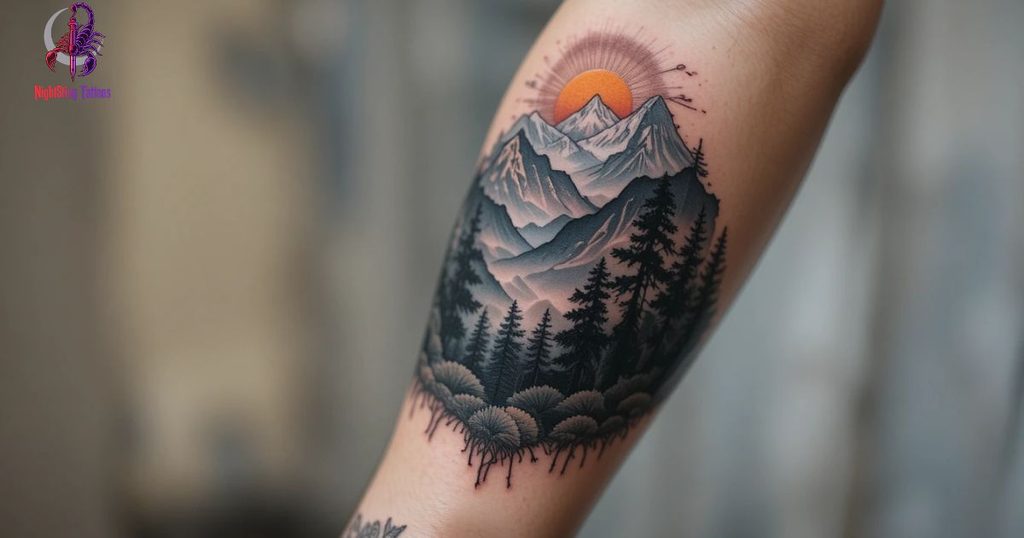
Flowers can create a beautiful sleeve without making the design feel overly delicate. Roses, peonies, chrysanthemums, lilies, and other flowers can be arranged around the natural curves of the arm.
For 40 Sleeve Tattoo Ideas, floral concepts are especially flexible because they can be created in black and grey, fine line, traditional color, or bold blackwork. Leaves, stems, thorns, and negative space can help connect individual flowers into one flowing composition.
4. Wolf and Forest Sleeve
A wolf combined with pine trees, mountains, moonlight, and forest scenery can create a sleeve with a strong outdoor character. The wolf can serve as the main focal point while the landscape fills the surrounding space.
This concept can symbolize independence, loyalty, survival, family, or a connection with nature. A black-and-grey treatment can make the forest feel atmospheric, while a more illustrative style can produce a graphic appearance.
5. Lion Sleeve Tattoo
A lion is another powerful focal image for a sleeve. The face can sit prominently on the upper arm or shoulder, with the mane extending naturally around the arm.
You can build the rest of the composition around themes such as strength, courage, leadership, family, or resilience. Adding geometric shapes, flowers, a crown, or subtle background shading can make the concept more personalized.
6. Koi Fish and Water Sleeve
Koi fish are particularly suited to sleeve compositions because their curved bodies can follow the shape of the arm. Water, waves, lotus flowers, and Japanese background patterns can connect the fish with the rest of the design.
A koi sleeve can be colorful or black and grey depending on your preferred aesthetic. If you want strong traditional Japanese influence, discuss the entire composition with an artist experienced in that style so the fish, water, and background work together rather than appearing as unrelated elements.
7. Geometric Sleeve Design

Geometric sleeves use circles, triangles, lines, symmetry, dotwork, and repeating patterns to create a highly structured appearance. They can be completely abstract or combined with recognizable imagery such as animals, mountains, or celestial objects.
Because the arm is rounded rather than flat, geometric designs require careful planning. A pattern that looks perfectly balanced on paper may appear different when wrapped around the arm. Your artist should therefore consider how the design looks from the front, side, and back.
Read Also: Spine Tattoo Ideas: 20 Stunning, Elegant, and Meaningful Designs for Your Back
8. Mandala and Ornamental Sleeve
Mandalas can become striking focal points around the shoulder, elbow, or forearm. Ornamental lines and symmetrical details can then extend outward to create a cohesive sleeve.
This style is particularly effective when negative space is deliberately included between dense sections. Instead of covering every centimeter, the artist can use open skin to create contrast and keep the composition readable.
9. Snake and Botanical Sleeve
A snake can wind naturally around the arm, making it an excellent subject for a sleeve. Leaves, flowers, branches, and small decorative elements can fill the surrounding areas without overpowering the snake.
The snake can symbolize transformation, renewal, resilience, or personal change. You can make it realistic, traditional, ornamental, or highly stylized depending on the overall direction of the sleeve.
10. 40 Sleeve Tattoo Ideas to Inspire Your Design
If you want a quick list of concepts before choosing a theme, here are 40 ideas:
- Japanese dragon sleeve
- Koi fish and waves
- Black-and-grey realism sleeve
- Wolf and forest scene
- Lion portrait sleeve
- Floral rose sleeve
- Peony botanical sleeve
- Snake and flowers
- Geometric pattern sleeve
- Mandala ornamental sleeve
- Traditional American sleeve
- Blackwork sleeve
- Viking mythology sleeve
- Norse gods and symbols
- Samurai sleeve
- Phoenix rebirth sleeve
- Eagle and patriotic imagery
- Skull and roses
- Clock and compass sleeve
- Mountain landscape sleeve
- Ocean and lighthouse sleeve
- Space and galaxy sleeve
- Celestial moon and stars
- Angel and religious imagery
- Gothic architecture sleeve
- Medieval armor sleeve
- Biomechanical sleeve
- Tribal-inspired sleeve
- Abstract linework sleeve
- Fine-line botanical sleeve
- Butterfly and flower sleeve
- Raven and moon sleeve
- Tiger and Japanese waves
- Elephant and nature sleeve
- Mythical creature sleeve
- Samurai mask sleeve
- Dagger and traditional roses
- Nature and wildlife sleeve
- Portrait and ornamental background
- Personal story or memory sleeve
These 40 Sleeve Tattoo Ideas can be combined and customized. For example, a mountain scene could include a compass representing direction, while a wolf could be surrounded by trees and a moon. The goal is to create relationships between the elements rather than simply filling empty areas with random images.
11. Traditional American Sleeve
Traditional American tattooing is known for bold outlines, strong shapes, and recognizable imagery. Roses, anchors, eagles, snakes, daggers, ships, hearts, and other classic motifs can be arranged into a sleeve.
A traditional sleeve does not necessarily have to be one continuous picture. Individual pieces can be connected with carefully selected filler, background elements, or open skin. The consistent line weight and visual language help the separate images feel like part of the same collection.
12. Full Sleeve vs. Half Sleeve
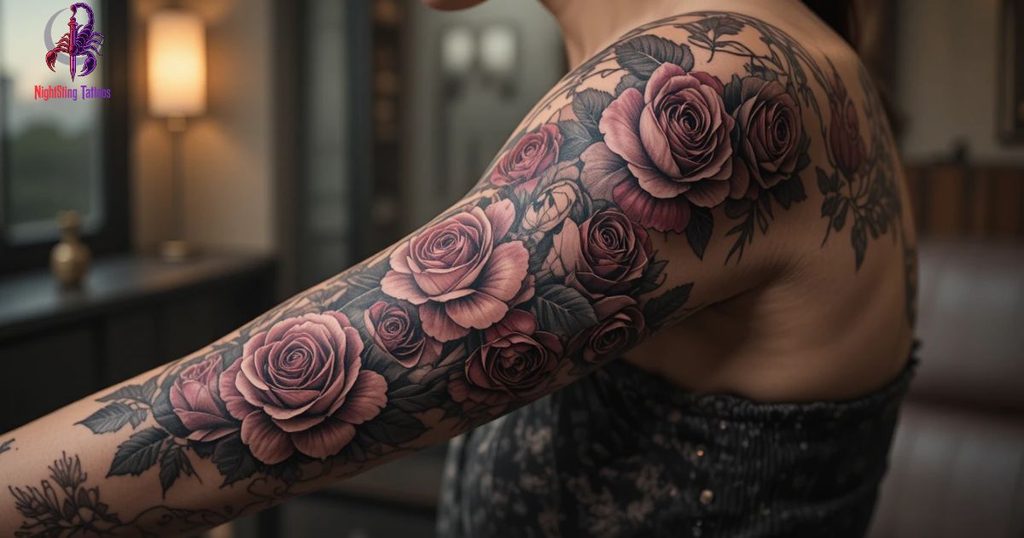
A full sleeve generally extends from the shoulder to the wrist, giving the artist the largest canvas for storytelling and detailed compositions. A half sleeve covers approximately half the arm and can run from shoulder to elbow or from elbow to wrist, depending on the design and terminology used by the artist.
A quarter sleeve provides an even smaller commitment and can be a practical starting point if you want to eventually expand the artwork. The important thing is to tell your artist your long-term plans before starting. A piece designed without future expansion in mind can make it harder to build a cohesive sleeve later.
13. How to Create Good Sleeve Flow
A sleeve should look convincing from multiple angles, not just when the arm is facing directly toward a camera. The shoulder, outer arm, inner arm, elbow, forearm, and wrist all create different surfaces, so the artwork needs to move naturally across them.
One useful approach is to place larger focal elements on broader areas such as the shoulder and outer upper arm, then use elongated imagery on the forearm. Background elements can connect these areas and guide the eye around the arm. Current sleeve-planning guidance consistently emphasizes continuity, flow, and designing around the arm’s changing shape.
14. Choosing Color or Black and Grey
Color sleeves can be vibrant and expressive, particularly when the theme includes flowers, Japanese imagery, fantasy creatures, or traditional designs. A carefully selected color palette can help separate major elements and create a distinctive visual identity.
Black-and-grey sleeves rely on linework, shading, contrast, and negative space instead. They can create a dramatic appearance and work particularly well with realism, portraits, skulls, wildlife, and darker themes. Neither approach is automatically better; the right choice depends on your preferred style and the artwork you want to build.
15. Planning a Sleeve Before Your First Session
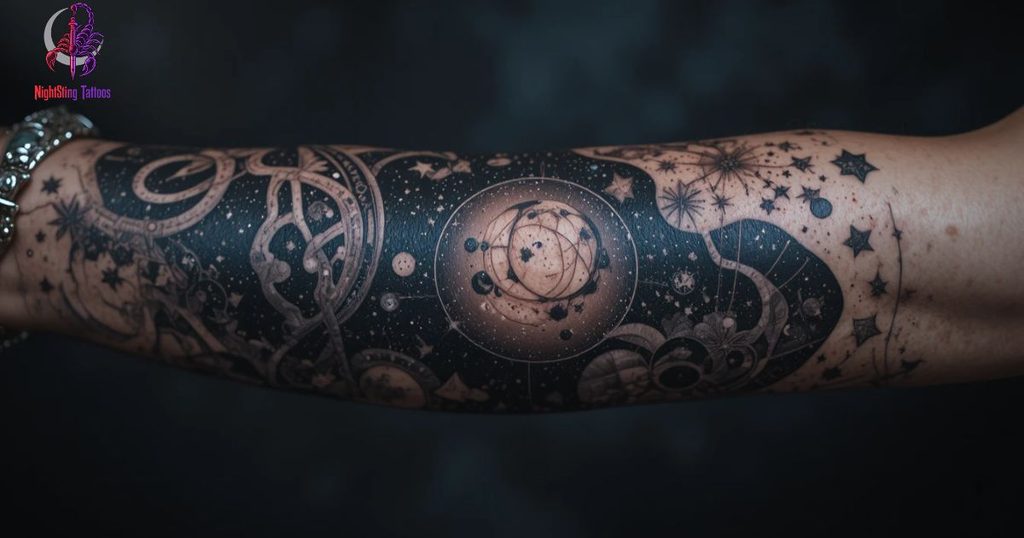
The most important step is deciding whether you want one unified composition or a sleeve that develops from individual tattoos over time. If you already have tattoos on the arm, the artist needs to work around their size, placement, line weight, and style.
Even when the tattoo will be completed over multiple appointments, planning the overall direction early can prevent awkward gaps and mismatched imagery. Recent sleeve guidance recommends thinking about the complete composition before execution, particularly when continuity and future expansion matter.
16. Sleeve Tattoo Pain and Healing
The amount of discomfort varies considerably depending on the location, session length, personal sensitivity, and the tattoo itself. Areas such as the outer upper arm are often more manageable for many people, while areas close to the elbow or inner arm can feel sharper.
A sleeve is usually a multi-session project rather than something completed in one short appointment. Your artist will determine the appropriate spacing between sessions based on the work being performed and how your skin heals. Do not schedule another session over skin that has not properly recovered.
Frequently Asked Questions
1. What are the best sleeve tattoo ideas?
Popular choices include Japanese dragons, koi fish, wolves, lions, flowers, snakes, geometric patterns, mandalas, blackwork, realism, traditional imagery, and nature scenes. The best option is one that matches your preferred tattoo style and has enough visual flexibility to work around the entire arm.
2. How long does a sleeve tattoo take?
There is no single time because complexity, coverage, color, detail, artist speed, and session length all vary. A full sleeve is generally a multi-session project and may be completed over weeks or months rather than in one appointment.
3. Should I plan my entire sleeve before getting started?
Ideally, yes, even if you plan to tattoo it gradually. Knowing the eventual theme, style, major focal points, and intended coverage gives your artist more freedom to create a cohesive composition.
4. Can I turn existing tattoos into a sleeve?
Often, yes. Existing tattoos can sometimes be connected using background, filler, shading, ornamental elements, or new imagery. However, their existing placement and style can limit the available options, so an experienced artist should evaluate the arm before you decide on the final plan.
5. Is a half sleeve a good alternative to a full sleeve?
A half sleeve can be an excellent option if you want substantial artwork without committing to shoulder-to-wrist coverage. It can also provide a natural starting point for a future full sleeve when the design is planned with expansion in mind.
Conclusion
The strongest 40 Sleeve Tattoo Ideas are not simply collections of attractive pictures. A great sleeve has structure, a clear visual direction, thoughtful placement, and enough breathing room for every important element to work. Whether you choose Japanese imagery, realism, blackwork, traditional designs, flowers, wildlife, geometry, or a completely personal story, the artwork should follow the natural shape of your arm.
Before committing, decide how much of the arm you want covered and whether you prefer color or black and grey. Then discuss your ideas with a professional tattoo artist who can turn your references into a custom composition. Planning the sleeve as a complete project—even when you complete it over several sessions—can make the final result feel much more intentional and connected.