The knee is one of the most distinctive areas of the body for a tattoo because its rounded shape, movement, and central position on the leg create a unique canvas. Unlike a flat area such as the forearm or thigh, the kneecap changes shape as the leg bends and straightens. This makes Knee Cap Tattoo Ideas particularly interesting for anyone who wants artwork that works with the body’s natural anatomy instead of simply sitting on top of it.
A well-planned knee tattoo can become the focal point of an entire leg composition or stand alone as a striking piece. Mandalas, flowers, spiders, skulls, geometric patterns, traditional symbols, ornamental designs, and bold blackwork can all be adapted to the kneecap. The key is choosing artwork that suits the circular shape and working with an experienced tattoo artist who understands how to design around a moving joint.
Why Choose a Knee Cap Tattoo?
The kneecap offers a naturally rounded surface that can make symmetrical and circular designs especially attractive. Mandalas, sun motifs, flowers, spiderwebs, geometric patterns, and ornamental circles can radiate outward from the center of the knee. Instead of trying to hide the anatomy, these designs use it as an important part of the composition.
A knee tattoo can also become an anchor for a larger leg tattoo project. If you already have artwork on your thigh or calf, the kneecap can serve as a visual transition between the two areas. Night Stings Tattoos currently features dedicated knee tattoo inspiration, including designs created to follow the natural curve of the kneecap, which demonstrates how varied this placement can be.
Are Knee Cap Tattoos a Good Choice?
A knee cap tattoo can be an excellent option if you want artwork that is highly visible and naturally connected to the structure of your leg. The location can accommodate both bold and detailed designs, and the rounded surface creates opportunities that are less practical on flatter parts of the body.
However, the knee is also a challenging area for tattoo design because it bends constantly and has a distinctive anatomical structure. A design that looks perfectly centered on a stencil may appear different when the leg moves. Your artist should consider the knee both while it is extended and while it is naturally bent before finalizing the composition.
Mandala Knee Cap Tattoo
A mandala is one of the most natural choices among Knee Cap Tattoo Ideas because its circular structure can be centered directly over the kneecap. The pattern can radiate outward from the middle, creating a symmetrical design that follows the rounded shape of the joint. Fine lines, dots, geometric shapes, and ornamental sections can all be incorporated into the pattern.
The level of detail should be chosen according to the available space. A highly complicated mandala can look impressive at a larger size, but squeezing too many tiny elements into a small area can make the tattoo visually crowded. A skilled artist can simplify the pattern while preserving the symmetry and overall character of the design.
Flower Knee Cap Tattoo
Flowers are another excellent option because many blooms already have a circular arrangement of petals. A rose, chrysanthemum, lotus, peony, or daisy can be positioned directly over the kneecap to create a natural centerpiece. Leaves and stems can then extend toward the thigh or calf.
You can choose between fine-line botanical artwork, realistic shading, traditional tattooing, or bold blackwork. A flower does not necessarily need to cover the entire knee. A smaller central bloom surrounded by negative space can look just as intentional while allowing the natural shape of the leg to remain visible.
Rose Knee Tattoo

A rose centered on the kneecap can create a dramatic and recognizable tattoo. The circular arrangement of petals naturally complements the shape of the joint, while the surrounding leaves can be extended toward the upper and lower leg.
A traditional rose works particularly well if you like bold outlines and strong color. A black-and-gray rose can create a more realistic appearance, while a fine-line rose gives the design a lighter aesthetic. Night Stings Tattoos’ traditional tattoo collection includes roses among its classic floral subjects, along with other bold designs that can inspire a traditional knee composition.
Read Also: Shin Tattoo Ideas: Bold, Stylish & Meaningful Designs
Spiderweb Knee Cap Tattoo
The spiderweb is a classic knee tattoo concept because the web’s circular structure can follow the shape of the kneecap. Lines can radiate from the center and extend toward the edges, creating an effect that looks integrated into the joint rather than placed randomly.
You can keep the spiderweb simple or add a spider, flowers, skulls, flames, or other imagery. Black ink is especially effective because the web depends on contrast and clear line separation. Avoid making the individual web sections unnecessarily small, particularly if the design needs to remain visually crisp over time.
Geometric Knee Cap Tattoo
Geometric artwork can transform the knee into a highly structured visual centerpiece. Circles, triangles, hexagons, lines, dots, and repeating patterns can be arranged around the kneecap to create a symmetrical composition.
The biggest advantage of geometric designs is their flexibility. You can choose something extremely minimalist or create an intricate ornamental pattern. However, precision is essential. Small spacing differences can become noticeable in symmetrical artwork, so choose an artist with experience in geometric tattooing and allow enough room for the design to breathe.
Sun Knee Tattoo
A sun tattoo can work beautifully over the kneecap because its circular center can follow the shape of the joint while the rays extend outward. This creates a design that is both symmetrical and visually strong.
You can choose a minimalist sun with simple rays or a more decorative interpretation featuring ornamental lines and detailed shading. A traditional sun can use bold outlines and strong colors, while a blackwork sun can create a darker, more dramatic appearance. The size of the rays should be carefully planned so they remain distinct when the knee bends.
Blackwork Knee Cap Tattoo
Blackwork is a strong choice if you want your knee tattoo to have immediate visual impact. Large areas of solid black can be combined with negative space, geometric shapes, abstract patterns, or ornamental details to create a bold composition.
Because blackwork can become visually heavy, negative space is particularly important. Skin breaks can separate different sections and prevent the tattoo from looking like one solid block. Your artist can use contrast between black areas and untouched skin to create depth and movement around the kneecap.
Traditional Knee Tattoo
Traditional tattoos are well suited to the knee because bold outlines and strong shapes remain recognizable even when the artwork is viewed from a distance. Roses, skulls, daggers, snakes, eagles, stars, hearts, and other classic symbols can all be adapted to the area.
Traditional tattooing also gives you the option of building a larger patchwork leg. You might place a bold rose on the kneecap and surround it with smaller traditional designs on the thigh and calf. This approach allows individual tattoos to remain distinct while still creating a cohesive overall aesthetic.
Skull Knee Cap Tattoo
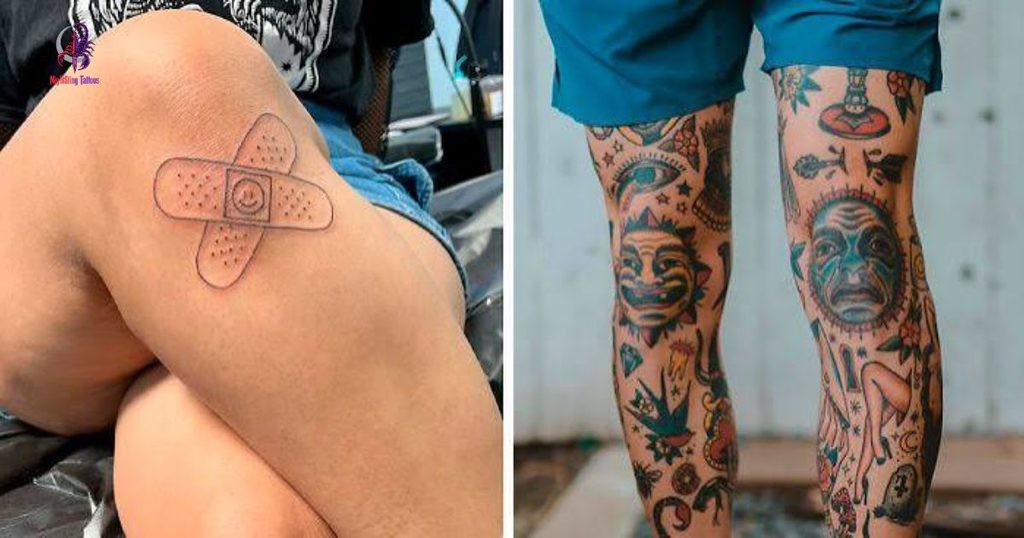
A skull can become a powerful centerpiece for the knee. The rounded skull shape naturally works with the circular area, while additional elements can extend toward the thigh or calf.
You can choose a realistic skull with detailed shading, a traditional skull with bold outlines, or an ornamental skull surrounded by flowers and decorative elements. If the design includes tiny details such as teeth, cracks, or intricate shading, make sure the tattoo is large enough for those details to remain readable.
Snake Knee Tattoo
A snake can be arranged around the kneecap instead of simply sitting directly over it. The body can curve around the joint while the head becomes the focal point on the front or side of the knee.
This design works across many tattoo styles. A realistic snake can emphasize scales and shading, while a traditional snake can use bold outlines and limited color. You can also combine the snake with flowers, a dagger, geometric patterns, or ornamental elements to create a more complex leg composition.
Eye Knee Tattoo
An eye can create a striking circular design for the kneecap. The iris and pupil naturally provide a central focal point, while eyelashes, rays, ornamental lines, or geometric shapes can extend outward.
For a realistic eye, you will need enough space for the artist to reproduce the iris, reflections, eyelids, and surrounding shading. A simplified eye can work at a smaller size. The final style can range from minimalist linework to dramatic blackwork or realism.
Lotus Knee Cap Tattoo
A lotus is another symmetrical design that can work beautifully on the kneecap. The flower can be centered over the joint with petals arranged in layers around the middle.
You can keep the lotus minimalist with simple outlines or develop it into a detailed ornamental design. Adding geometric circles, dots, or decorative lines around the petals can make the tattoo feel more elaborate without requiring a completely separate subject.
Ornamental Knee Tattoo
Ornamental tattoos are designed around decorative symmetry, repeating patterns, fine lines, and jewelry-like details. This style can make the kneecap look almost like a permanent piece of body jewelry.
An ornamental knee tattoo can be extended toward the thigh and calf with matching patterns. This creates a continuous design rather than a single isolated image. If you are planning a larger leg tattoo, tell your artist at the beginning so the knee artwork can be designed as part of the complete composition.
Tribal Knee Cap Tattoo
Tribal-inspired patterns can create a strong visual effect around the kneecap through bold curves, repeated shapes, and solid black sections. The circular knee can become the center of a pattern that expands outward.
If you are interested in a culturally specific traditional tattoo style, research the particular tradition rather than treating every tribal pattern as interchangeable. Discuss the symbolism and appropriate design approach with an artist who has genuine experience with the relevant style.
Gothic Knee Tattoo

Gothic knee tattoos can combine dark flowers, crosses, skulls, candles, thorns, ravens, arches, and ornamental patterns. The circular area of the kneecap provides an excellent place for a dramatic central symbol.
Blackwork is often effective for gothic artwork, but you can also use fine lines and negative space for a more intricate result. A gothic knee tattoo can be especially striking when connected with dark ornamental artwork extending up the thigh or down the calf.
Crescent Moon Knee Tattoo
A crescent moon can be arranged over or around the kneecap, particularly if you want something less conventional than a circular design. The curve of the moon can follow the shape of the joint while stars and dots fill the surrounding space.
A minimalist moon can be relatively small, while a larger celestial composition can include phases of the moon, planets, constellations, and ornamental details. Night Stings Tattoos’ minimalist resources include celestial concepts such as crescent moons, suns, stars, and constellations, which can provide additional inspiration for simplifying a larger knee concept.
Compass Knee Tattoo
A compass can create a strong geometric focal point on the knee. Its circular structure fits naturally over the kneecap, while the directional points can extend outward toward the edges.
The design can represent direction, travel, exploration, or a personal journey. You can add mountains, waves, a map, coordinates, or a banner to make the tattoo more specific to your story. Make sure the compass markings are appropriately sized so the design remains clear.
Lion Knee Tattoo
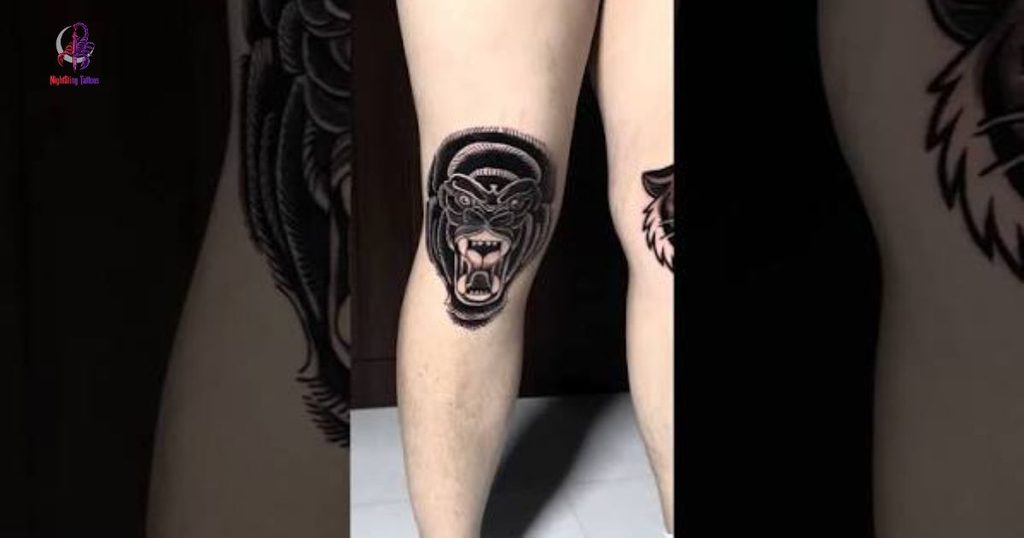
A lion face can become a bold centerpiece on the kneecap, especially when created in realism or detailed black-and-gray. The mane can expand beyond the central circular area, allowing the tattoo to connect naturally with the surrounding leg.
A simplified illustrative lion can work if you prefer a less realistic style. Traditional tattooing can also create a powerful lion with bold outlines and strong shapes. The important consideration is giving the facial features enough space so the eyes, nose, and mouth remain clear.
Wolf Knee Tattoo
A wolf can be positioned directly over the kneecap or slightly above it, with the surrounding fur extending outward. A realistic wolf requires enough room for facial details and shading, while a geometric wolf can use strong angular shapes to create a contemporary appearance.
You can add a moon, mountains, forest, or geometric frame to give the tattoo more context. If you already have leg tattoos, consider using background elements that visually connect the wolf with the rest of your artwork.
Eye and Mandala Combination
Combining an eye with a mandala creates a highly symmetrical design with a strong central focal point. The eye can sit in the middle of the kneecap while the mandala pattern expands outward around it.
This concept works particularly well in blackwork and ornamental styles. However, it can become extremely detailed, so make sure the tattoo is large enough for the artist to maintain separation between the eye and surrounding pattern. Simplifying some of the outer elements can improve readability.
Floral Mandala Knee Tattoo
A floral mandala combines the organic appearance of petals with the symmetry of geometric artwork. The flower can form the central structure while repeated petals and ornamental lines radiate outward.
This is a particularly versatile option because it can be made delicate or bold. Fine-line floral mandalas can create an elegant appearance, while blackwork versions can produce a much stronger visual statement. The choice of line weight and negative space will significantly affect the final result.
Spider Knee Tattoo
A spider centered on the kneecap can create a visually unusual tattoo that takes advantage of the joint’s circular shape. The spider’s body provides a natural focal point while its legs can extend around the contours of the knee.
You can choose a realistic spider, simplified illustration, or traditional tattoo interpretation. A web can be added around the spider if you want a larger composition. If the legs are very thin, make sure they have enough separation from the surrounding lines.
Flame Knee Tattoo
Flames can be arranged around the kneecap to create a sense of movement. Instead of placing a static circular image over the knee, the flame tips can follow the edges of the joint and connect with tattoos on the thigh or calf.
Traditional flames can use bold outlines and color, while blackwork flames can rely on solid shapes and negative space. You can also combine flames with a skull, heart, dagger, snake, or other central image for a more elaborate design.
Dagger Knee Tattoo
A dagger can be positioned vertically through the knee or integrated into a circular composition. A rose-and-dagger combination can place the flower over the kneecap while the blade extends downward or upward.
This design can be particularly effective in traditional tattooing because bold outlines keep the dagger recognizable. You can also use ornamental or blackwork techniques for a darker modern interpretation. Be careful with extremely thin decorative details along the blade because they may become difficult to distinguish if the design is too small.
Sacred Geometry Knee Tattoo
Sacred-geometry-inspired designs can use circles, triangles, repeating patterns, and symmetrical structures to create a highly detailed knee tattoo. The kneecap becomes the center of the geometry while the pattern expands outward.
This type of tattoo requires careful planning because the design needs to remain balanced when the knee moves. Your artist should position the central point correctly and account for the joint’s contours. The more complicated the geometry, the more important precision and adequate sizing become.
Butterfly Knee Tattoo
A butterfly can be centered over the kneecap with its wings extending across the rounded surface. The symmetry of the wings complements the symmetry of the joint, making it a natural design choice.
A fine-line butterfly can look delicate, while a traditional butterfly can use stronger outlines and color. You can also add flowers, stars, moons, or ornamental details around the wings. Keep the surrounding elements sufficiently separated so the butterfly remains the clear focal point.
Sun and Moon Knee Tattoo
A sun-and-moon design can combine two contrasting circular symbols into one composition. The sun can represent energy and brightness, while the moon can introduce a more nocturnal or mysterious aesthetic.
You can divide the kneecap between the two symbols or place one central design surrounded by the other. A black-and-gray approach can make the composition subtle, while traditional colors can create a bolder visual effect. Keep the two elements balanced so neither overwhelms the other.
Minimalist Knee Cap Tattoo
Not every knee tattoo needs to be large and elaborate. A minimalist design can use a simple symbol, clean geometric pattern, tiny flower, crescent moon, or abstract linework.
Minimalism requires careful restraint. Night Stings Tattoos notes that minimalist tattoos rely on simple symbols, clean lines, negative space, and thoughtful proportions rather than simply making an elaborate tattoo smaller. For a knee tattoo, your artist should also consider how the design sits on the joint when the leg is bent and extended.
Patchwork Knee Tattoo
A patchwork approach uses multiple individual tattoos rather than one continuous sleeve. The knee can contain a central design while traditional or illustrative pieces are placed around the thigh and calf.
This style gives you flexibility because you can add tattoos gradually. Roses, stars, snakes, hearts, skulls, flowers, daggers, animals, and other symbols can coexist when they share a compatible visual style. Night Stings Tattoos’ traditional tattoo guide similarly discusses how individual classic designs can be combined into larger tattoo compositions.
Full Leg Knee Centerpiece
If you are planning a full leg project, consider making the kneecap the central visual anchor. A mandala, flower, skull, geometric pattern, or ornamental design can occupy the knee while complementary artwork flows onto the thigh and calf.
This approach requires the most planning but can produce the most cohesive result. Think about the entire leg from multiple angles before beginning. The knee should not simply be treated as an empty space between two tattoos; it can become the central element that connects the complete composition.
How to Choose the Right Knee Cap Tattoo Ideas
Start by deciding whether you want the knee tattoo to stand alone or become part of a larger leg design. If you already have tattoos on your thigh or calf, look at their shapes, colors, and styles before selecting the new piece. A complementary design can make separate tattoos appear much more connected.
Next, consider how the design will interact with movement. Circular artwork is naturally suited to the kneecap, but not every design needs to be perfectly round. Your artist can adapt flowers, animals, snakes, flames, and geometric patterns to follow the shape of the joint. The final stencil should be evaluated while the leg is both straight and naturally bent.
Knee Cap Tattoo Placement Tips
The exact placement of a knee tattoo matters enormously. A design that is slightly off-center can appear unbalanced because the kneecap naturally attracts attention. Your artist should carefully identify the center of the joint and determine how the artwork will sit around it.
You should also think about whether the design will extend above or below the kneecap. A flower might have petals centered on the knee with leaves extending upward, while a snake could wrap around the side and continue toward the calf. Planning these transitions before tattooing can prevent awkward gaps.
How Big Should a Knee Tattoo Be?
The size depends on the design, your anatomy, and whether you want the artwork to extend beyond the kneecap. A simple geometric symbol may work at a relatively compact size, while a detailed portrait or mandala may need more room.
Avoid choosing a highly detailed design and then shrinking it simply to keep the tattoo small. Fine details need adequate spacing, particularly on a joint that moves frequently. If the design is too compressed, individual lines can become difficult to distinguish. A professional artist can simplify the artwork or recommend an appropriate size.
Are Knee Cap Tattoos Painful?
Tattoo discomfort varies between individuals and depends on the exact area, design, technique, session length, and personal sensitivity. The knee is a distinctive anatomical area, so some people may find tattooing around the kneecap more challenging than tattooing areas with more cushioning.
If you are concerned about the experience, discuss the session with your artist before booking. They can explain how large the design is likely to be, how long the appointment may take, and whether a complex piece would be better divided into multiple sessions.
Do Knee Tattoos Heal Differently?
A knee tattoo requires practical consideration because the joint is constantly moving. Bending and straightening the leg can affect how the area feels during healing, and clothing or everyday activity may create friction.
Follow the aftercare instructions given by your tattoo artist rather than applying a generic routine. Your artist understands the technique, products, and equipment used during the appointment and can give you instructions appropriate to the tattoo. If you develop concerns during healing, seek professional medical advice when appropriate.
Do Knee Tattoos Fade Quickly?
All tattoos gradually change with time, but the appearance of a knee tattoo can be influenced by its placement, ink saturation, design, lifestyle, and exposure to friction or sunlight. Designs with strong shapes and appropriate spacing can remain easier to read as they mature.
This is one reason experienced tattoo artists often avoid excessive micro-detail in areas where movement and anatomy make the design challenging. Night Stings Tattoos’ minimalist and fine-line guides emphasize appropriate line weight, spacing, design size, and placement when considering how tattoo artwork may look as it heals and ages.
Knee Tattoo Ideas for a Leg Sleeve
If you are planning a leg sleeve, the knee can act as the centerpiece that visually connects the upper and lower sections. A large mandala, flower, skull, spiderweb, ornamental pattern, or geometric composition can occupy the joint while background elements flow toward the thigh and calf.
Before starting, show your artist any existing tattoos and explain your long-term plans. This allows them to consider spacing, visual weight, color, and transitions. Building the design gradually can work well, but the overall direction should be considered from the beginning.
Knee Cap Tattoo Ideas for Different Styles
The same subject can look completely different depending on the tattoo style. A rose in American traditional style uses bold outlines and strong color, while a realistic rose relies on detailed shading. A mandala can be delicate fine-line work or dense blackwork, and a snake can be minimalist, illustrative, traditional, or photorealistic.
Rather than choosing a design first and a style second, think about both together. If you already know that you love bold traditional artwork, select a subject that benefits from that visual language. If you prefer understated tattoos, a simplified geometric, floral, or celestial concept may suit you better. Night Stings Tattoos currently covers traditional, minimalist, and fine-line approaches that can help you compare these aesthetics before choosing.
Frequently Asked Questions
What is the best tattoo for a kneecap?
There is no single design that works best for everyone, but circular and symmetrical artwork often complements the rounded shape of the kneecap. Mandalas, flowers, spiderwebs, geometric patterns, suns, ornamental designs, and skulls are popular choices because their structures can radiate naturally from the center.
Are knee cap tattoos very painful?
Pain or discomfort varies significantly from person to person. The knee has a distinctive anatomy, and tattooing directly around the kneecap can feel different from tattooing an area with more cushioning.
What designs work well over the kneecap?
Circular and symmetrical designs are particularly natural choices. Popular examples include mandalas, flowers, spiderwebs, suns, geometric patterns, ornamental designs, skulls, and eyes.
Should a knee tattoo be circular?
No. Although circular designs naturally complement the kneecap, they are not the only option. A tattoo can be vertical, horizontal, asymmetrical, or designed to wrap around the joint.
Can I include a knee tattoo in a leg sleeve?
Yes. The kneecap can become one of the most important elements of a leg sleeve. You can use a central design on the knee and connect it with artwork on the thigh, calf, and lower leg.
Conclusion
A knee tattoo can be much more than a design placed over a joint. When carefully planned, the kneecap can become the central canvas for a mandala, flower, spiderweb, skull, geometric pattern, traditional symbol, or larger leg-sleeve composition. The unique shape of the knee creates opportunities that can make your tattoo stand out from more conventional placements.
Whether you prefer bold traditional artwork, delicate fine-line designs, dark blackwork, realistic imagery, or ornamental geometry, focus on choosing a concept that works with your anatomy and personal style. Give the artist enough room to create clear details, consider how the design moves with your leg, and plan future tattoos if you want a larger composition. With thoughtful design and professional execution, your knee tattoo can become one of the defining pieces of your overall tattoo collection.