30 Mandala Tattoo Ideas & Meanings can help you find a design that feels both visually beautiful and personally significant. Mandalas are known for their balanced shapes, repeating details, and symbolic connection to harmony, wholeness, balance, and inner focus.
A mandala can be simple and delicate or large and highly detailed. Some people choose these patterns purely because they love their symmetry, while others connect them with spirituality, personal growth, protection, or a meaningful stage of life.
The best design depends on your preferred tattoo style, placement, size, and the meaning you want it to represent. Below are 30 different concepts to inspire your next piece.
What Does a Mandala Tattoo Mean?
Mandalas traditionally represent ideas such as balance, unity, harmony, completeness, and spiritual awareness. Their circular structure often draws attention toward a central point, creating a visual feeling of order and calm.
The meaning can also become personal. Adding flowers, animals, geometric shapes, celestial elements, or other symbols can turn a traditional pattern into a tattoo that reflects your own story.
There is no single universal meaning for every mandala tattoo. Your artist can also adjust the design to emphasize a particular theme, making the finished piece more personal.
30 Mandala Tattoo Ideas & Meanings
1. Classic Circular Mandala
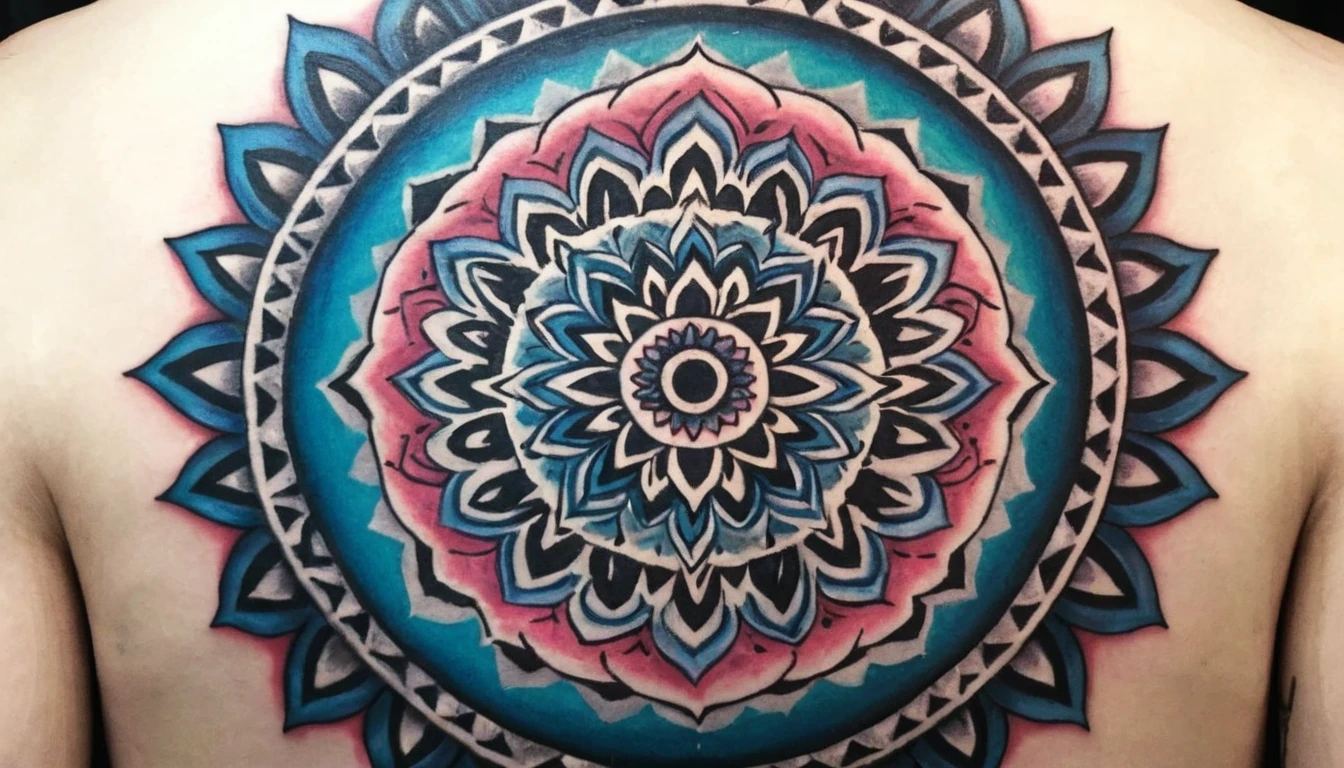
A traditional circular mandala is an excellent choice if you want the recognizable look of layered geometric patterns. Repeating petals and symmetrical lines create a balanced design that works particularly well on larger flat areas of the body.
It can symbolize harmony, completeness, and inner balance. Keeping the design mostly black and gray gives it a timeless appearance.
2. Small Mandala Tattoo
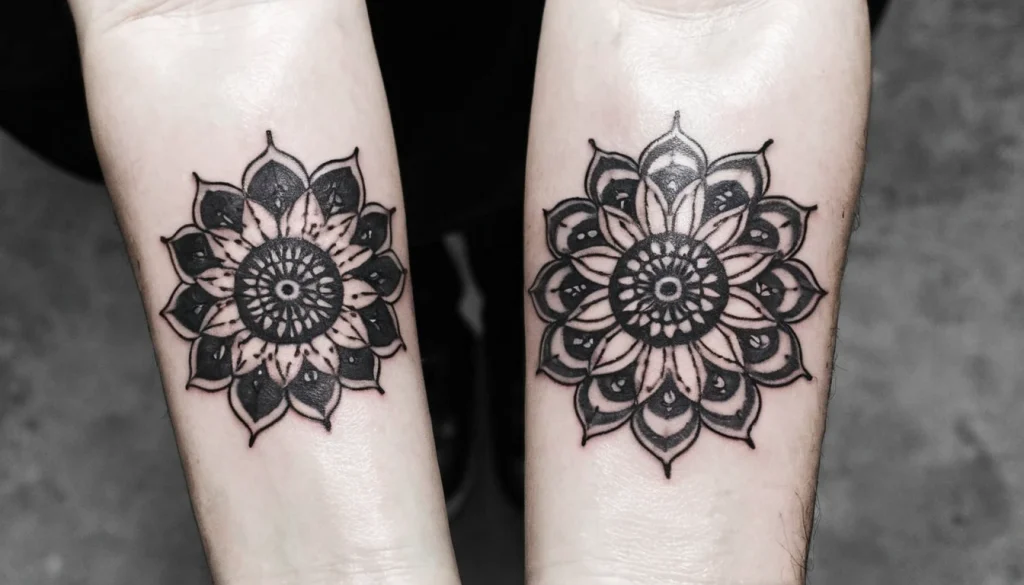
A small mandala uses fewer details while keeping the central circular structure. It can be placed on the wrist, ankle, forearm, behind the ear, or another smaller area.
This option is ideal if you want something meaningful without committing to a large tattoo. Simple linework also tends to give the design a clean and understated appearance.
3. Fine-Line Mandala
Fine-line work gives a mandala a delicate and modern appearance. Thin strokes can highlight individual petals and geometric sections without making the tattoo feel heavy.
This style works especially well for people who prefer minimalist tattoos and subtle body art. Your artist should carefully consider line spacing because extremely small details can become difficult to maintain over time.
4. Mandala Flower Tattoo

Combining a mandala with floral elements creates a softer, more organic design. Roses, lotuses, daisies, and other flowers can be incorporated around or inside the geometric pattern.
Flowers can add meanings such as growth, beauty, renewal, and transformation, giving the overall tattoo additional emotional depth.
5. Lotus Mandala
A lotus and mandala combination is popular because both designs can represent personal growth and spiritual development. The lotus can form the center while geometric details spread outward.
It creates a strong visual contrast between natural petals and precise symmetry. This concept works particularly well as a forearm, thigh, back, or chest piece.
6. Mandala Sun Tattoo
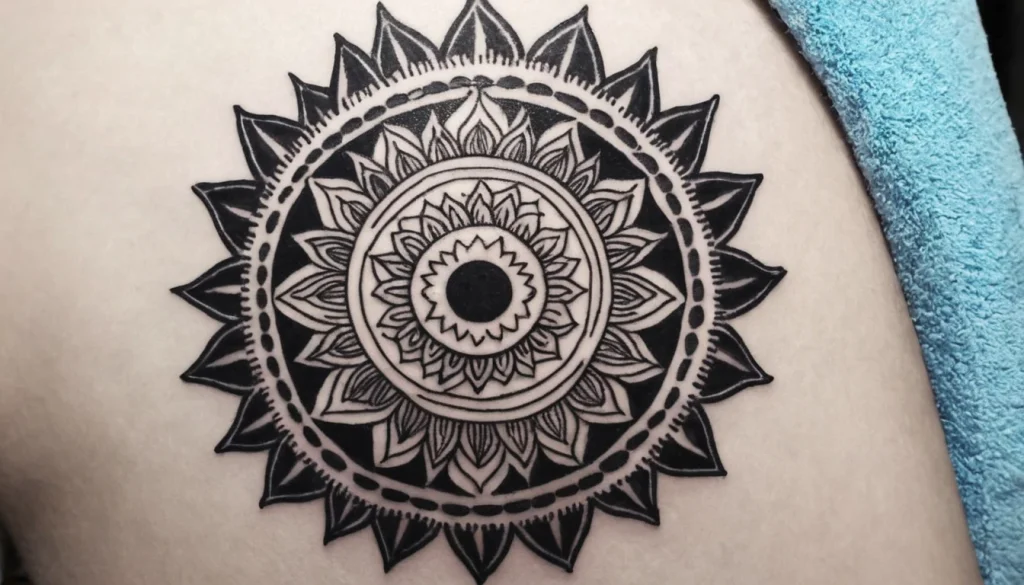
A sun-inspired mandala uses rays around the outer edge to create a radiant appearance. The central circle can remain geometric while the surrounding sections become more energetic.
This design can represent strength, positivity, energy, and new beginnings. It is particularly effective as a larger tattoo where the rays have enough room to breathe.
7. Mandala Moon Tattoo
A crescent moon surrounding or overlapping a mandala creates a mysterious and elegant composition. The circular geometry contrasts nicely with the curved lunar shape.
Moon imagery can represent change, cycles, intuition, and personal transformation. Adding small stars can make the design feel more celestial without overwhelming the central pattern.
8. Mandala With Butterfly
A butterfly can be positioned above, below, or partially integrated into the mandala. The combination creates a design that balances geometric precision with an organic subject.
Butterflies commonly represent transformation, freedom, and personal growth. This makes the concept suitable for someone marking a major change in life.
9. Mandala With Rose
A rose placed in the center of a mandala creates a striking combination of softness and symmetry. The petals can blend naturally into the geometric sections.
A rose can represent love, beauty, passion, or remembrance, while the mandala adds themes of balance and completeness.
Read Also: 30 Lion Tattoo Ideas for Powerful, Bold Designs
10. Mandala Back Tattoo
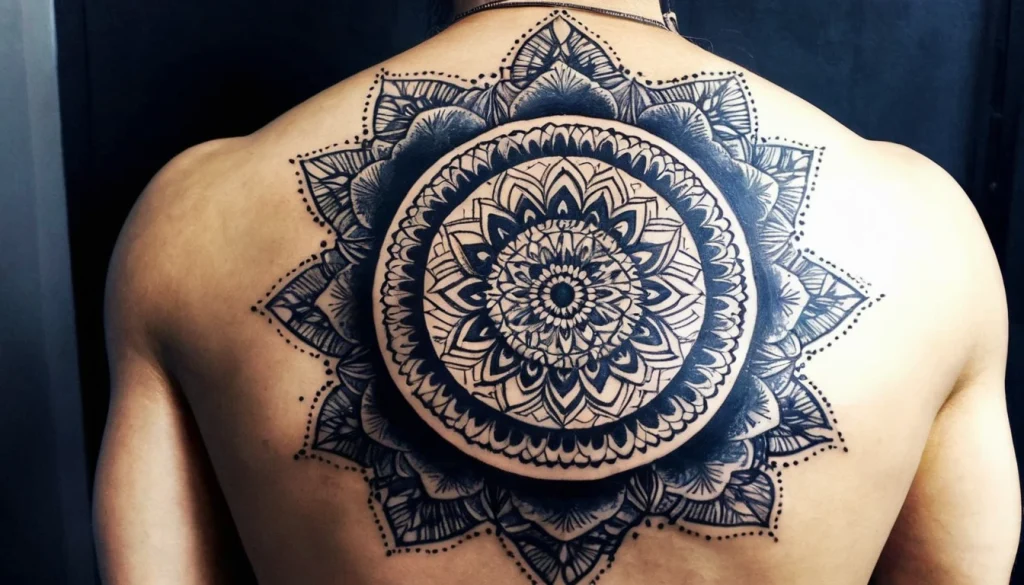
The back provides enough space for a large, symmetrical composition. A central mandala can be extended with ornamental lines, flowers, dots, or additional geometric patterns.
Because the back offers a broad canvas, your artist can preserve fine details and create a more dramatic visual effect.
11. Mandala Chest Tattoo
A chest mandala can be positioned in the center of the chest or designed to complement the body’s natural symmetry. Larger designs can extend toward the shoulders or sternum.
This placement can give the tattoo a powerful appearance while allowing plenty of room for intricate details.
12. Mandala Forearm Tattoo
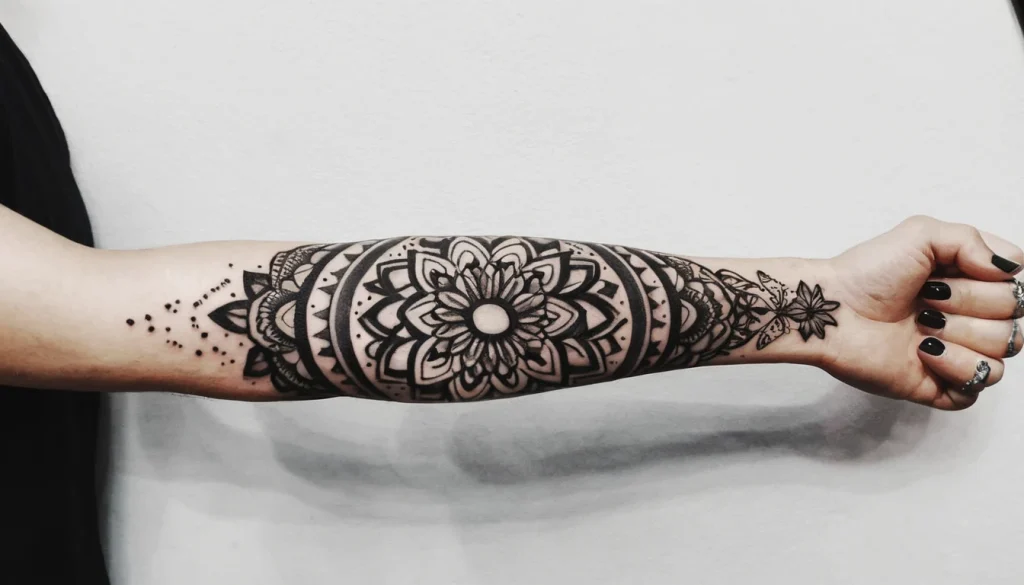
The forearm is a practical placement for a medium-sized design because the tattoo remains relatively easy to see. A vertical composition can combine the circular mandala with ornamental extensions.
It is a good choice if you want the artwork to be visible regularly while still having enough space for meaningful detail.
13. Mandala Shoulder Tattoo
The rounded shape of the shoulder naturally complements circular artwork. A mandala can sit directly over the shoulder or extend slightly toward the upper arm.
This placement works especially well with ornamental tattoo designs, floral additions, and flowing geometric patterns.
14. Mandala Thigh Tattoo
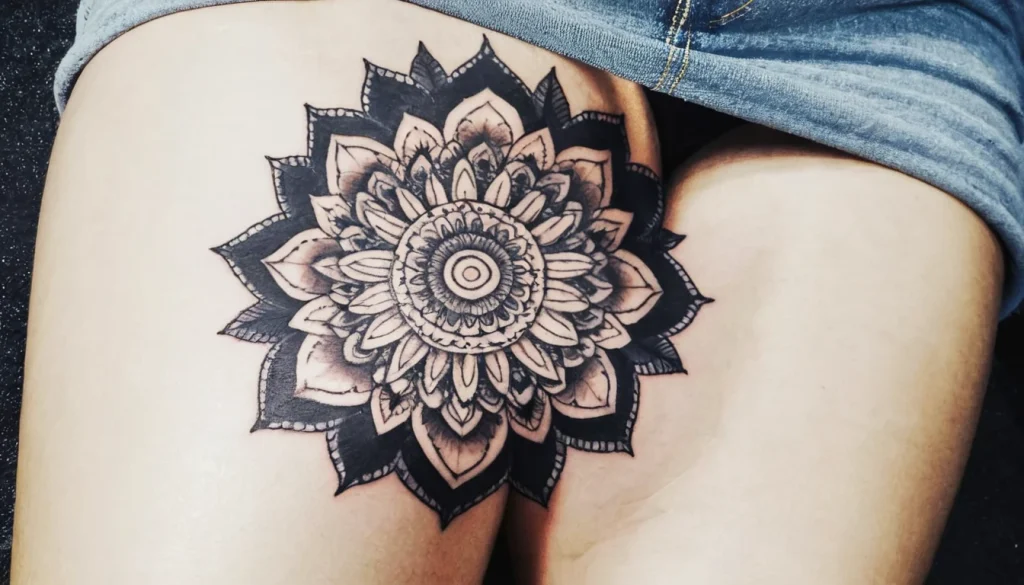
The thigh offers a large area for an intricate mandala. You can choose a centered design or create a composition that combines the mandala with flowers, leaves, animals, or ornamental elements.
Because there is more room, the artist can include smaller details without crowding the design.
15. Mandala Sleeve Tattoo
A mandala can become the focal point of a larger sleeve. Additional geometric patterns, flowers, dotwork, animals, or ornamental shapes can connect the central design with the surrounding artwork.
The key is creating visual flow rather than simply placing separate tattoos beside one another.
16. Geometric Mandala
For a more structured appearance, choose a mandala built around geometric shapes such as triangles, circles, diamonds, and repeating lines.
This style emphasizes precision and symmetry. It can represent order, stability, and balance while creating a distinctly modern aesthetic.
17. Dotwork Mandala
Dotwork uses carefully arranged dots to create shading, texture, and depth. It is especially effective for mandalas because the technique naturally complements repetitive geometric patterns.
A dotwork piece can look detailed without relying heavily on solid black areas, giving it a textured and sophisticated finish.
18. Blackwork Mandala
Blackwork uses bold areas of solid black alongside negative space. This approach produces strong contrast and makes the pattern immediately noticeable.
It is a good option if you prefer a tattoo with a darker, more dramatic character. Proper spacing is essential so the design remains readable as it ages.
19. Mandala With Sacred Geometry
Sacred geometry-inspired artwork incorporates patterns and shapes associated with mathematical symmetry and spiritual symbolism.
A mandala can be combined with circles, overlapping triangles, hexagons, or other geometric structures. The result often has a highly organized appearance with strong visual depth.
20. Mandala Hand Tattoo
A mandala on the hand can create an eye-catching statement piece. Because the available space is limited and the area experiences frequent movement and exposure, a relatively clear design can work better than extremely dense detailing.
Discuss the placement carefully with an experienced tattoo artist before choosing this option.
21. Mandala Wrist Tattoo
The wrist is suitable for smaller mandalas with clean linework. A compact circular design can sit on the inner or outer wrist.
This placement is ideal for people who want a tattoo that feels personal and subtle. Adding a small floral or ornamental border can make the design more distinctive.
22. Mandala Ankle Tattoo
An ankle mandala can be small, feminine, understated, or highly decorative depending on the design. Circular symmetry works naturally around this compact placement.
You can also extend small ornamental details toward the foot for a more elaborate composition.
23. Mandala With Elephant
An elephant combined with a mandala creates a powerful design centered on strength, wisdom, patience, and resilience.
The elephant can form the central subject while mandala patterns fill the surrounding area. This combination works particularly well as a larger forearm, thigh, or upper-arm tattoo.
24. Mandala With Wolf
A wolf surrounded by mandala geometry creates a balance between an animal-focused tattoo and intricate ornamentation. The wolf can symbolize loyalty, independence, instinct, and strength.
Using the mandala as a background can make the animal stand out while keeping the overall composition unified.
25. Mandala With Skull
For a darker aesthetic, combine a skull with ornamental mandala patterns. The contrast between mortality imagery and symmetrical geometry creates a visually powerful tattoo.
This concept can represent mortality, change, acceptance, or living with purpose. Blackwork and dotwork are particularly effective styles for this combination.
26. Mandala Finger Tattoo
A tiny mandala can be adapted for the finger, although the limited space means the design needs to remain relatively simple.
Avoid packing too many fine details into a very small area. A bold central shape with a few clear symmetrical sections can remain more recognizable.
27. Mandala Neck Tattoo
A neck mandala can be bold and highly visible. It may be positioned at the back of the neck or designed to follow the natural shape of the side or front of the neck.
Because the area is prominent, choosing a design that matches your overall tattoo collection can help create a cohesive appearance.
28. Mandala With Feathers
Feathers can soften the structured appearance of a mandala. They can be placed underneath the circular design, extending outward from the sides, or incorporated into the outer border.
Depending on the personal symbolism, feathers may represent freedom, spirituality, protection, or remembrance.
29. Mandala With Geometric Lines
Adding straight lines, triangles, circles, and negative-space sections can turn a traditional mandala into a contemporary geometric composition.
This approach is especially useful if you want something that feels less floral and more architectural. Careful symmetry and consistent line weight are essential to the final appearance.
30. Personalized Mandala Tattoo
A personalized mandala combines the central structure with symbols that have specific meaning to you. Initials, dates, flowers, animals, celestial elements, or other small details can be incorporated into the composition.
This is often the strongest choice if you want the tattoo to represent a personal milestone rather than simply following a popular design trend.
How to Choose the Right Mandala Design
Start by deciding what you want the tattoo to communicate. If your priority is balance and simplicity, a clean circular design may be enough. If you want a deeper personal story, consider combining the pattern with an animal, flower, celestial symbol, or meaningful geometric element.
Next, consider size and placement. A detailed mandala needs enough space for its individual sections to remain clear. Your tattoo artist can help determine how much detail is appropriate for the body area you have selected.
Finally, think about the tattoo style. Fine-line, dotwork, blackwork, ornamental, and geometric approaches can produce very different results even when they use the same basic mandala structure.
Best Placements for Mandala Tattoos
Back and Chest
The back and chest are excellent choices for large symmetrical pieces. These areas allow an artist to build a central composition with additional decorative elements.
Arms and Legs
The forearm, upper arm, shoulder, thigh, and calf offer flexible placement options. Medium-sized designs can remain detailed without requiring an extremely large tattoo.
Wrist, Ankle, and Hand
Smaller areas work best with simplified patterns. Choosing fewer sections and stronger lines can help preserve clarity in a compact design.
How to Make a Mandala Tattoo Look Unique
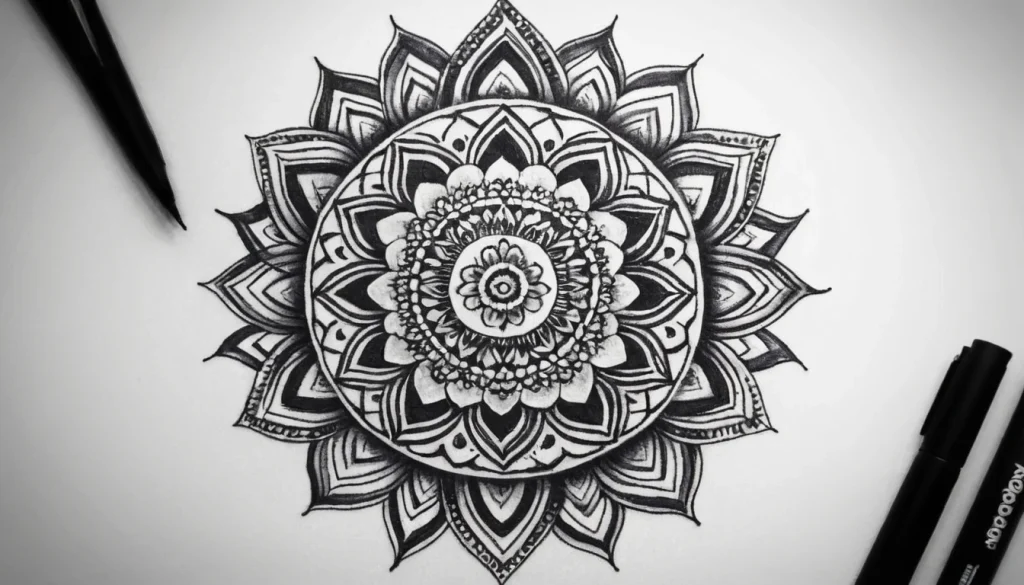
A mandala does not have to look like every other symmetrical design. Personalization is the easiest way to create something distinctive.
Consider changing the central symbol, incorporating meaningful flowers, adding an animal, experimenting with negative space, or combining geometric and organic elements. You can also ask your artist to develop a custom pattern based on your preferred style rather than copying an existing tattoo.
The most successful custom designs usually have a clear visual hierarchy: one central focal point, supporting details around it, and enough negative space to keep the entire tattoo readable.
Black and Gray vs. Color Mandalas
Black and gray mandalas emphasize linework, shading, symmetry, and contrast. They are versatile and can work with almost any surrounding tattoo style.
Color can create a completely different mood. Deep reds, blues, greens, purples, or softer tones can highlight individual sections, although adding color may change the visual balance of a highly detailed pattern.
Neither option is automatically better. Choose based on the appearance you want and how well it fits with your existing tattoos.
Tips for Getting a Detailed Mandala Tattoo
Before your appointment, decide approximately where you want the tattoo and how large you are comfortable making it. Bring references that show the overall style you like, but allow your artist to create an original composition suited to your body.
Avoid choosing a design that contains more detail than the available space can realistically support. Line spacing, contrast, scale, and negative space all affect how clearly the finished tattoo will look.
Most importantly, choose an experienced artist whose portfolio demonstrates strong symmetry, geometric work, and consistent line quality. A skilled artist can adjust the design so it follows the body’s shape instead of looking like a pattern simply placed on the skin.
Frequently Asked Questions
What does a mandala tattoo symbolize?
A mandala commonly represents balance, harmony, unity, completeness, and spiritual awareness. Its meaning can become more personal when combined with other symbols or designed around a particular life experience.
Are mandala tattoos only for women?
No. Mandala tattoos are suitable for anyone. The design can be adapted through size, line weight, placement, geometric elements, and accompanying imagery to create a masculine, feminine, neutral, or completely personalized appearance.
Where is the best place for a mandala tattoo?
There is no single best placement. The back, chest, shoulder, forearm, thigh, and calf are popular because they provide enough space for symmetrical artwork, while the wrist and ankle can work well for simpler versions.
Are mandala tattoos difficult to tattoo?
Highly detailed mandalas can be challenging because they depend on precise symmetry and consistent spacing. Choosing an artist experienced with geometric, ornamental, or dotwork tattoos can make a significant difference.
Should a mandala tattoo be black or colorful?
Both options can work. Black and gray emphasize geometry and contrast, while color can highlight individual sections and create a more expressive appearance. Your choice should match your preferred aesthetic and existing tattoos.
How big should a detailed mandala tattoo be?
The ideal size depends on the amount of detail and where you want it placed. If the pattern contains many small sections, giving it more space usually helps preserve clarity and definition over time.
Conclusion
A mandala can be much more than a symmetrical decorative pattern. With the right combination of geometry, symbolism, placement, and tattoo style, it can become a meaningful piece of personal artwork.
Whether you prefer a small fine-line design, an intricate dotwork composition, a floral mandala, or a large back piece, focus on creating a tattoo that suits both your personality and your body. Use these ideas as inspiration, then work with an experienced artist to develop a custom design that feels genuinely yours.